
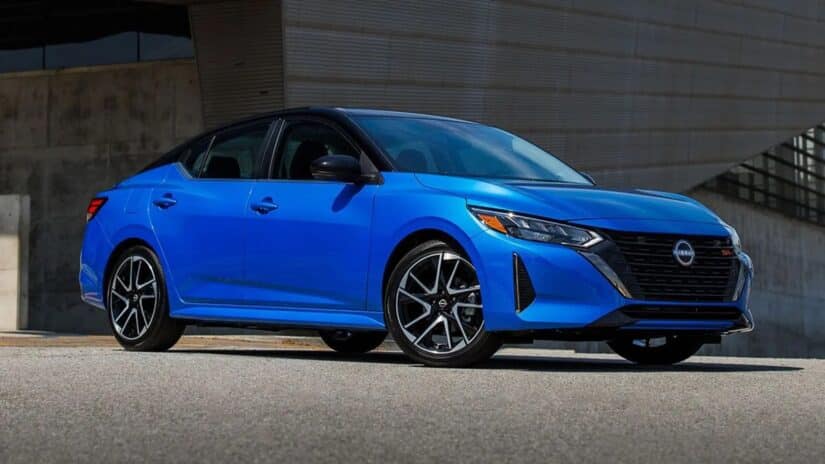
The 2025 Nissan Sentra has recently come under federal scrutiny after a major safety defect was discovered in its windshield glass. During routine quality inspections, engineers identified air bubbles forming inside the laminated windshield layers, a flaw that can expand over time and severely obstruct driver visibility. Because the defect poses a direct risk to road safety, the National Highway Traffic Safety Administration (NHTSA) issued an official recall, urging all affected Sentra owners to take immediate action. Drivers across the U.S. are now being advised to check their Vehicle Identification Number (VIN) and schedule a free windshield replacement as part of the safety recall.
Overview of the 2025 Nissan Sentra Safety Recall
The safety recall covers a wide range of 2025 Nissan Sentra vehicles manufactured using windshield glass that may contain air bubbles. This issue was discovered during quality inspections and promptly reported through the National Highway Traffic Safety Administration recall announcements system. The safety recall became official on November 21, 2025.
Nissan confirmed that the air bubbles appear inside the laminate layers of the windshield glass. These laminate layers typically include multiple glass sheets bonded with Polyvinyl Butyral, commonly known as PVB film. When intact and properly sealed, PVB film strengthens the windshield, improves clarity, and ensures the glass remains in place during accidents. If any step in the bonding process is compromised, visual distortions can form between the layers.
The problem in the 2025 Nissan Sentra involves these distortions. Air pockets inside the windshield laminate layers can expand due to heat, sunlight, moisture, or pressure changes. Over time, the air bubbles may become even more visible and significantly affect driver visibility.
Why Air Bubbles in Windshield Glass Are Dangerous
Windshield visibility plays a crucial role in every moment of driving. Even a slight obstruction or distortion can impact depth perception, reaction time, and clarity. In this recall, the air bubbles appear across different portions of the windshield glass, creating unclear patches and blurred reflections.
The consequences include:
- Reduced ability to see road hazards
- Increased glare from sunlight and headlights
- Difficulty estimating distances
- Distractions caused by visual inconsistencies
- Higher risk during rain, fog, or nighttime driving
These visibility issues can be especially hazardous on highways, at intersections, or during emergency braking situations.
Violation of Federal Motor Vehicle Safety Standard 205
The windshield defect violates Federal Motor Vehicle Safety Standard number 205, also known as FMVSS 205. This regulation outlines specific requirements for glazing materials used in motor vehicles, including transparency, durability, resistance to shattering, and optical quality.
Windshield glass must be free from:
- Foreign particles
- Distortions
- Lamination gaps
- Warping
- Visibility-impairing air pockets
The presence of air bubbles means the defective windshield does not meet Federal safety standards and may fail to perform correctly during collisions or airbag deployment. These violations triggered the NHTSA to officially add the recall to its recall lookup system.
Possible Causes: How the Manufacturing Defect Occurred
Windshield glass manufacturing is a multi-step process involving materials, heating cycles, and precise alignment of layers. A minor oversight can cause significant safety issues later. Industry analysts suggest several possible causes for this recall:
1. Supplier Production Issue
Some 2025 Nissan Sentra vehicles may have received windshield glass from a supplier whose equipment or processes were not calibrated correctly. Issues with temperature control or pressure levels during lamination can lead to imperfect bonding of the PVB film.
2. Problems with Windshield Glass Molds
Windshield glass molds, including front windshield glass molds, must be perfectly shaped and maintained. Wear or contamination of molds can result in improper sealing.
3. Foreign Particles Between Layers
Dust, moisture, or other foreign particles trapped between glass panes can prevent proper bonding. These particles can create gaps that later turn into air bubbles.
4. Faulty PVB or Polyvinyl Butyral Film
If the PVB film is flawed or contaminated, it may not adhere properly to the glass sheets, leading to defects in the windshield laminate layers.
5. Manufacturing Process Variations
Changes in humidity, pressure, or curing time can weaken adhesive bonds. Even minimal inconsistencies can result in long-term defects.
These possibilities highlight that the windshield issue is not likely caused by driver misuse but is instead a full manufacturing defect that requires correction.
Impact on Driver’s Visibility and Road Safety
A defective windshield that contains air bubbles can compromise both driver visibility and driver’s vision. Poor visibility is a major factor in traffic accidents, especially when unexpected obstructions alter depth perception.
Common visibility concerns linked to the defective windshield include:
- Distorted images
- Difficulty seeing pedestrians, traffic signs, or lane markings
- Blurred reflections
- Wavy appearances in the glass
- Enlarged air pockets under sunlight
These distortions may worsen over time, especially in states with hot climates or significant seasonal temperature swings.
NHTSA’s Official Response and Recall Timeline
The National Highway Traffic Safety Administration (also listed as the National Traffic Safety Administration) received Nissan’s defect notification and published the recall in its official system. Each affected vehicle is listed by its Vehicle Identification Number, allowing owners to verify whether their car is included.
NHTSA assigned the recall campaign number 25V807000, confirming the severity of the windshield defect.
Key recall steps include:
- Nissan issuing a formal safety recall
- VINs uploaded into the NHTSA recall lookup system
- Notification letters scheduled to be mailed by January 15, 2026
- Free windshield inspections and replacements offered to vehicle owners
- Nissan providing customer service support at 1-800-867-7669
Owners can also check the NHTSA recall tool to confirm whether their vehicle is affected.
What Vehicle Owners Need to Do Immediately
Every 2025 Nissan Sentra owner should take the recall seriously, even if their windshield currently appears normal.
1. Check Your Vehicle Identification Number
Use the NHTSA recall tool or Nissan’s recall website to check if your VIN is included.
2. Look for Visible Defects
Inspect for early signs of air bubbles, distortions, or cloudiness in the windshield glass.
3. Wait for Your Recall Letter or Notification Letters
These letters will explain how to schedule your free repair.
4. Contact Nissan Customer Service
The customer service line can help if you have difficulty scheduling repairs.
5. Keep Documentation
Retain your recall letter, repair paperwork, and warranty claims for future reference.
Ignoring the defect could place drivers and passengers at risk, especially as visibility issues worsen over time.
Will Nissan Cover Repair Costs?
Yes. Because this is a formal safety recall, the repair is offered free of charge. Nissan will replace the defective windshield with compliant glazing materials that meet Federal Motor Vehicle Safety Standard requirements.
Repairs typically include:
- Inspection of the windshield
- Removal of the defective windshield
- Installation of new windshield glass
- Quality testing to ensure the new glass meets FMVSS 205
You may also submit warranty claims if the defect caused additional damage, although this depends on case-specific conditions.
Future Implications for Nissan and Vehicle Owners
The recall affects thousands of 2025 Nissan Sentra vehicles, highlighting how even minor manufacturing flaws can create widespread safety concerns. It also raises questions about supplier quality control and the reliability of windshield glass molds used during production.
Nissan has faced other unrelated issues, including allegations related to fire risk in different models, but this windshield recall is unique to the Sentra.
For owners, staying aware of recall information is crucial. Auto recalls based on glazing material flaws have occurred before across multiple brands, and NHTSA continues to monitor manufacturing processes closely.
About Ted Law Firm
At Ted Law Firm, supports consumers who face challenges related to defective windshield issues, federal safety standards violations, and vehicle recall complications.We serve families across Aiken, Anderson, Charleston, Columbia, Greenville, Myrtle Beach, North Augusta and Orangeburg. Many individuals struggle to understand recall information, warranty claims, or how to respond when a manufacturing defect impacts their daily safety. Our team provides direction and clarity for vehicle owners seeking to protect themselves, stay informed, and move forward with confidence during the recall process.Contact us today for a free consultation.