
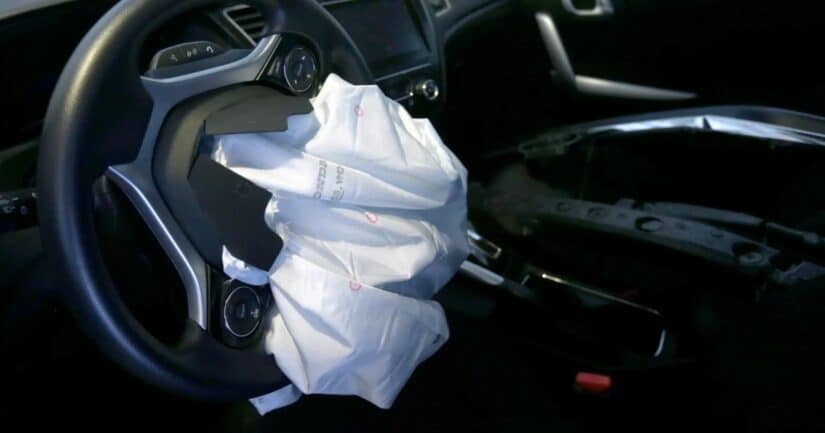
A new federal investigation led by the FBI and the National Highway Traffic Safety Administration (NHTSA) has revealed that illegal Chinese airbags have caused more deaths in the United States than previously known. Since 2017, at least eight vehicle safety incidents have involved aftermarket airbags illegally imported and installed after earlier crashes.
Authorities confirmed that six drivers were killed and two sustained severe injuries when counterfeit airbag inflators made by Jilin Province Deiannua Automobile Safety System Company (DTN) ruptured during deployment. These counterfeit components were installed in cars after repairs and sold through unregulated online channels.
The investigation exposes serious gaps in the airbag recall system and raises questions about accountability among auto repair shops, insurance associations, and vehicle manufacturers that may have unknowingly used these substandard parts.
The background of the investigation
The NHTSA’s Office of Defects Investigation (ODI) first became aware of substandard or counterfeit airbags more than a decade ago. In 2012, officials discovered auto theft networks and online vendors selling unverified inflator modules that mimicked legitimate parts from major suppliers. Testing conducted by the NHTSA revealed that these inflators malfunctioned during deployment either failing to deploy altogether or expelling metal shrapnel due to ruptures. The failure pattern mirrored the catastrophic Takata airbag recall, which killed and injured hundreds worldwide. However, these Chinese airbags were not made by Takata or ARC Automotive; they came from unauthorized suppliers such as DTN Automotive Safety Systems Co. in Jilin Province. What began as isolated discoveries has evolved into a national vehicle safety crisis. Victims and families affected by defective or counterfeit airbags may pursue a wrongful death claim or consult a product liability lawyer to hold negligent manufacturers and distributors accountable.
Deadly incidents connected to DTN inflators
The most shocking case emerged in September 2017, when a 2009 Honda Civic experienced a driver-side airbag rupture that killed the driver. Investigators later found that the airbag module had been replaced after a previous collision with a counterfeit DTN inflator.
In June 2023, a 2020 Chevrolet Malibu suffered a similar airbag rupture, killing the driver instantly. Within the next twelve months, four more Chevrolet Malibu fatalities followed, all linked to DTN-branded inflators.
By March 2024, two more deaths were reported in Hyundai Sonata vehicles, a 2017 Sonata and a 2019 Sonata each fitted with substandard replacement inflators. In every case, the failure involved ruptured aftermarket airbag modules purchased online or from unverified third-party sellers.
Federal investigators note that the pattern does not implicate vehicle manufacturers themselves; the defect lies with illegal airbag components installed outside authorized supply chains.
How counterfeit airbags enter the U.S. market
According to the FBI, counterfeit airbags often arrive through illegal imports, mislabeled as generic replacement parts. Unscrupulous distributors list them on websites that cater to collision-repair businesses looking for cheap alternatives to OEM components.
Many of these products come from unregulated factories in Jilin Province, with DTN packaging and falsified certification labels. Once in the United States, the counterfeit parts flow through online marketplaces or independent body shops, bypassing customs enforcement.
Because the products are marketed as compatible replacements, they may appear legitimate to repair facilities unaware of their origin.
Why these airbags are so dangerous
The NHTSA has found that DTN inflators consistently fail safety standards. During tests, several detonated with enough force to rupture metal casings and send shrapnel into the driver cabin. Others failed to inflate the airbag at all, leaving drivers unprotected.
These failures are particularly deadly because airbags deploy with explosive speed. A ruptured inflator can become a grenade, turning every piece of the airbag assembly into lethal debris.
Unlike genuine units manufactured under regulated safety systems, counterfeit devices use low-grade materials, lack proper seals, and often contain mismatched propellant chemicals. They are ticking time bombs inside vehicles that otherwise passed factory crash tests years earlier.
The role of NHTSA and the FBI
The FBI and NHTSA have joined forces to identify the distribution networks behind these illegal imports. Agents are tracing online transactions, interviewing auto repair shop owners, and working with customs officials to locate smuggling routes.
The agencies believe the criminal operation may extend beyond one company, encompassing multiple counterfeiters selling defective inflators under the same DTN name.
Federal authorities are also coordinating with the Department of Justice to determine whether charges such as wire fraud, product liability, or conspiracy to defraud the United States apply.
A decade of warnings ignored
This crisis did not emerge overnight. Internal NHTSA records show that counterfeit inflators have been detected since 2012. Yet, no major enforcement campaign followed because officials lacked evidence of real-world injuries at the time.
That changed after the 2017 Honda Civic fatality. Even then, public warnings received limited attention compared with the massive Takata recall, which dominated headlines.
By the time the Chevrolet Malibu and Hyundai Sonata cases surfaced, counterfeit airbags had already been installed in thousands of cars across the country.
Consumer advocates and car safety experts argue that the government’s failure to maintain a comprehensive counterfeit-parts registry allowed this security flaw in supply chains to persist.
What drivers should know
American drivers should treat any vehicle repaired after a major crash with caution. If an airbag has ever been replaced outside a certified dealership, the safest option is to verify the part number and supplier.
Key steps include:
- Check recall databases. Visit the official NHTSA recall lookup to confirm whether your car has been part of any airbag recall campaign.
- Request documentation. Ask your repair shop to identify the supplier of the airbag module and provide proof of authenticity.
- Avoid online bargains. Counterfeit inflators often appear on auction sites at prices far below OEM parts.
- Monitor official updates. The NHTSA continues to issue new advisories and potential software updates for diagnostic systems that can flag unrecognized inflators.
Insurance and liability complications
Owners who unknowingly installed aftermarket airbags face complex legal questions after crashes. Insurers may argue that unauthorized modifications void certain coverage clauses, leaving victims with limited compensation.
However, if investigators prove that counterfeit parts were sold or installed through deceptive practices, insurance associations and regulators may pursue broader enforcement under consumer protection laws.
Drivers injured by substandard airbag inflators could have claims against distributors, repair shops, or importers depending on who placed the counterfeit product into the market.
How this differs from the Takata crisis
The Takata airbag recall was one of the largest automotive recalls in history, involving millions of vehicles and dozens of fatalities. The current DTN airbag crisis is smaller in scale but no less concerning.
The difference lies in the source. Takata was a legitimate supplier that produced defective propellant; DTN inflators are illegally imported counterfeits. They never met regulatory standards and entered the country outside official distribution channels.
This distinction matters because regulatory oversight typically ends once counterfeit parts are installed making consumer detection and legal recourse far more difficult.
How counterfeit airbags evade detection
Counterfeit inflators often mimic the appearance of genuine parts. Labels, serial numbers, and QR codes are falsified to match OEM databases. Even some dealership technicians struggle to identify them without dismantling the unit.
The NHTSA is now developing diagnostic software that cross-checks airbag module responses during service visits. Future software updates could allow technicians to detect counterfeit modules via scan tools.
Still, the system depends on consistent cooperation between dealerships, independent mechanics, and federal investigators.
The human cost
Behind every statistic is a family that lost someone. In several of these cases, victims survived initial collisions only to die when their counterfeit airbags exploded.
The most recent death, involving a 2020 Chevrolet Malibu, illustrated this tragic pattern: a routine fender-bender triggered an airbag deployment that turned deadly due to a ruptured DTN inflator.
The families of these victims have called for stronger oversight of aftermarket parts and tougher penalties for counterfeit imports.
What happens next
The FBI and NHTSA continue to gather evidence. Preliminary findings suggest that thousands of vehicles may still contain illegal airbag inflators. Federal agencies are urging car owners to schedule inspections, especially if airbags were replaced in the past decade.
Congressional committees may hold hearings to examine whether current U.S. law provides enough authority for customs officials to intercept counterfeit safety parts.
Meanwhile, cybersecurity researchers and vehicle safety experts are calling for a zero-trust approach to supply-chain validation verifying each airbag’s origin at every step from manufacture to installation.
When legal help becomes necessary
Victims injured by counterfeit airbag deployments may face high medical bills, lost wages, and emotional trauma. If insurers deny compensation or manufacturers deflect responsibility, legal intervention may be required.
A law firm can help victims:
- Document evidence that the airbag was counterfeit.
- Identify the importer, distributor, or repair facility responsible.
- Pursue claims for product liability, negligence, or wrongful death.
- Coordinate with other victims to strengthen collective legal pressure.
Each case depends on documentation and expert analysis of the airbag inflator involved.
Broader implications for consumer safety
The counterfeit-airbag crisis highlights systemic weaknesses in global supply chains. While the FBI and NHTSA lead the current inquiry, long-term prevention will require collaboration between customs enforcement, e-commerce platforms, and vehicle manufacturers.
Public awareness is equally critical. Drivers must recognize that a bargain replacement part can conceal deadly risks. As counterfeiters adapt, regulators and the public must adopt the same vigilance treating every unverified component as a potential threat to life.
About Ted Law
At Ted Law Firm,represents individuals and families across the United States in product liability, personal injury, and consumer protection cases.We proudly represent injury victims throughout Georgia, including Atlanta, Athens, Savannah, Columbus, Warner Robins, and Macon.From defective vehicle components to insurance disputes, Ted Law advocates for those harmed by corporate negligence and unsafe manufacturing practices. With a focus on clear guidance and determined representation, the firm helps victims seek justice and hold responsible parties accountable.Contact us today for a free consultation.