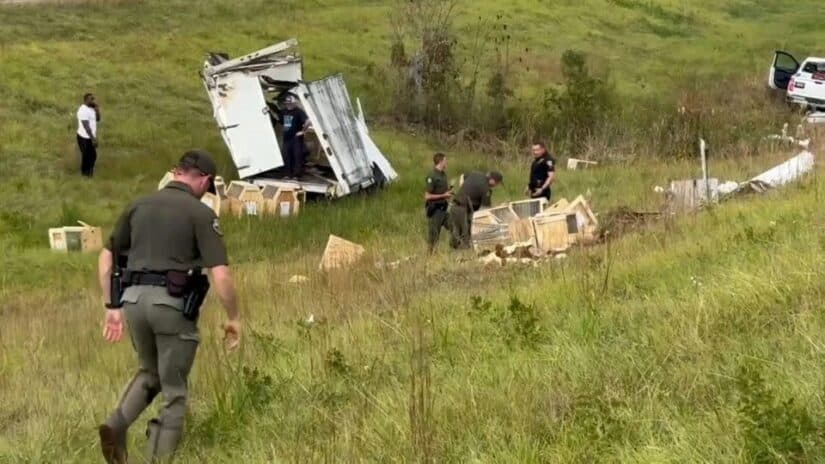
The Crash and Immediate Aftermath
The Jasper County Sheriff’s Department reported the crash around midday. A truck overturned and released its cargo of research monkeys. These animals, known as Rhesus macaques, escaped into nearby areas.
Witnesses saw monkeys moving through grass and trees. At the same time, responders treated the injured driver. Deputies warned residents to stay away from the animals.
Officials closed parts of the highway to manage the situation. Crews cleared debris and began search efforts quickly.
Containment Efforts by Experts
Law enforcement worked with animal care experts and biologists. They set up containment zones and tracked the animals. Teams used nets, tranquilizers, and safety gear.
By evening, they recovered most of the monkeys. However, officials euthanized several animals due to safety risks. Experts located the animals near wooded areas and drainage paths.
Authorities noted that frightened animals may act aggressively. Therefore, they acted quickly to prevent harm.
Public Confusion and Health Concerns
Early reports caused confusion among residents. Officials initially warned about possible disease risks. As a result, concern spread across social media.
Later, Tulane University clarified the situation. The monkeys had no exposure to infectious diseases. They were standard research animals.
Officials explained that early confusion came from the driver’s statements. Therefore, they corrected the information to reduce panic.
Ownership and Transport Questions
Authorities have not confirmed ownership of the animals. Tulane University stated that it housed the monkeys but did not own them.
The animals were in transit to another research facility. Officials have not yet named the transport company. However, federal agencies may review the case under existing laws.
Ethical Concerns and Research Debate
The incident has sparked debate about animal research. Critics argue that transport practices create risks. They believe companies should improve safety and oversight.
Experts also stress proper handling of research animals. Rhesus macaques require controlled environments. Therefore, transport conditions must reduce stress and risk.
Multi-Agency Response
Several agencies responded to the incident. These included transportation officials, wildlife experts, and local law enforcement.
Teams secured the highway and removed damaged equipment. They also managed biological waste to avoid contamination.
Officials praised the quick coordination between agencies. This response helped limit further risks.
Environmental and Safety Impact
Experts are monitoring the area for environmental impact. Released animals can affect local ecosystems. Therefore, officials are checking nearby forests and wetlands.
Even short-term exposure can cause disruption. As a result, authorities are continuing safety checks.
Public Reaction and Awareness
Residents reacted with concern and curiosity. Many shared videos and updates online.
Some people criticized the transport process. Others questioned why research animals traveled through populated areas.
This incident has increased awareness about safety and oversight.
Media Coverage and Misinformation
The story spread quickly across news platforms. However, early reports created confusion.
Officials later urged the public to rely on verified sources. Therefore, accurate communication became essential during the crisis.
Transport Regulations and Risks
Federal law sets strict rules for transporting research animals. Vehicles must meet safety and containment standards.
This crash has raised concerns about enforcement. Therefore, experts are calling for stricter inspections and monitoring.
Why This Incident Matters
This case highlights risks in animal transport and public safety. Even without disease exposure, the situation created fear and disruption.
Experts warn that poor containment could cause serious harm. Therefore, strong safety measures remain essential.
Lessons for Future Prevention
Officials are reviewing safety procedures after the crash. They are considering better tracking and training systems.
They also recommend improved coordination between agencies. Therefore, these steps can help prevent similar incidents.
Aftermath and Ongoing Investigation
Authorities reopened the highway after clearing the site. They confirmed that no animals remained missing.
The driver received treatment and was later released. Meanwhile, officials continue to investigate the cause of the crash.
Final Thoughts
This incident shows the importance of safety and responsibility. It also highlights the risks of transporting research animals.
Therefore, stronger rules and better awareness can help prevent future accidents.