
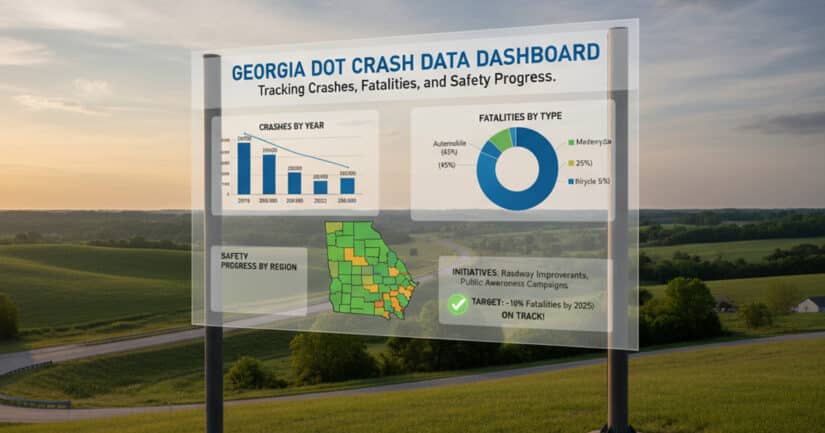
The Georgia DOT continues to improve roadway safety transparency through the GDOT Crash Data Dashboard, a comprehensive crash data portal that provides public access to Georgia’s vehicle data, crash reports, and traffic fatalities. An Atlanta car accident lawyer often references this database to analyze collision trends, high-risk zones, and contributing factors when building strong claims for clients. Spanning the years 2020–2024, this platform highlights safety campaigns, crash mapping, and actionable insights that support data-driven solutions for safer roads across the state.
What the GDOT Crash Data Dashboard Does
The GDOT Crash Data Dashboard was developed by the Georgia DOT and its Crash Reporting Unit to simplify how crash and vehicle data are shared with the public. The tool empowers residents, researchers, and policymakers to understand the scope of roadway issues in real time.
Visitors can access:
- Comprehensive crash data for every city, county, and region.
- Interactive crash mapping that visualizes high-risk areas.
- Detailed crash reports covering factors like distracted driver behavior or bicycle involved and pedestrian involved incidents.
- Analytical tools such as crash type filters for examining specific causes.
- Connections to safety campaigns like GDOT Drive Alert Arrive Alive and DOT Drive Alert.
The dashboard merges raw vehicle data with educational outreach, showing how safety campaigns and policy changes influence traffic fatalities statewide.
Georgia Crash Data Overview (2020–2024)
Georgia recorded over 1.8 million crashes between 2020 and 2024. In total, 8,451 crashes were fatal. These incidents led to 9,134 deaths and over 727,000 injuries.
Clearly, road safety remains a serious concern. Despite ongoing efforts, traffic fatalities continue to impact communities. Therefore, authorities are focusing more on prevention.
Safety Campaigns and Public Awareness
The Georgia DOT runs several safety campaigns. Programs like Drive Alert Arrive Alive aim to reduce accidents. In addition, they target distracted driving, speeding, and impaired driving.
These campaigns remind drivers to stay alert. For example, even a short distraction can cause a crash. Therefore, simple habits like wearing seat belts can save lives.
Crash Mapping and Data Insights
The GDOT Crash Data Dashboard offers advanced tools. It allows users to analyze crash locations and patterns. In addition, it shows data based on severity and conditions.
Users can apply filters for pedestrian and bicycle crashes. As a result, planners can identify high-risk areas. Therefore, this data helps improve road design.
Crash Reporting and Data Collection
The Crash Reporting Unit collects crash reports across the state. Officers submit detailed information after each incident. This includes vehicle data, speed, and driver condition.
Then, officials verify and store the data. As a result, the system maintains accuracy. Therefore, it supports both public safety and legal research.
How Georgia DOT Uses Crash Data
The Georgia DOT uses crash data to improve infrastructure. Engineers study patterns to identify dangerous locations.
For example, they adjust traffic signals and add signage. In addition, they focus on areas with frequent accidents. Therefore, data-driven decisions improve safety.
National Trends and Collaboration
The Governors Highway Safety Association works with Georgia DOT. Together, they compare state data with national trends.
This collaboration ensures better strategies. In addition, it aligns policies with national safety goals. Therefore, it strengthens overall road safety efforts.
Medical Response and Survival Rates
Emergency response plays a key role in crash outcomes. Faster response times improve survival rates.
For example, quick treatment helps in serious cases. Therefore, coordination between EMS and hospitals is essential. Data helps improve these systems.
Trends and Observations
Crash data reveals important patterns. Urban areas report more pedestrian accidents. Meanwhile, rural areas face delayed medical response.
These insights guide policy decisions. Therefore, officials can focus on specific risks.
Public Access and Transparency
The crash data portal allows public access. Users can explore crash reports and statistics easily.
In addition, they can request detailed data if needed. Therefore, transparency increases awareness and accountability.
Drive Alert Arrive Alive Initiative
The Drive Alert Arrive Alive campaign connects data with real behavior. It shows how small mistakes lead to major crashes.
For example, distracted driving increases risk significantly. Therefore, awareness campaigns play a key role in prevention.
Legal Importance of Crash Data
Crash data also supports legal cases. Law firms use reports to prove fault and negligence.
Accurate data helps victims seek compensation. Therefore, it plays a role in both safety and justice.
Why Crash Data Matters
Crash data helps save lives. It connects behavior, infrastructure, and outcomes.
Therefore, informed decisions reduce accidents. Collaboration between agencies and communities remains essential.


About Ted Law
At Ted Law Firm, We proudly represent injury victims throughout Georgia, including Atlanta, Athens, Savannah, Columbus, Warner Robins, and Macon.represents victims of auto accidents, wrongful deaths, and roadway negligence throughout Georgia. The firm’s commitment to data-driven advocacy aligns with the GDOT Crash Data Dashboard and Georgia DOT’s mission to create safer highways.Contact us today for a free consultation