
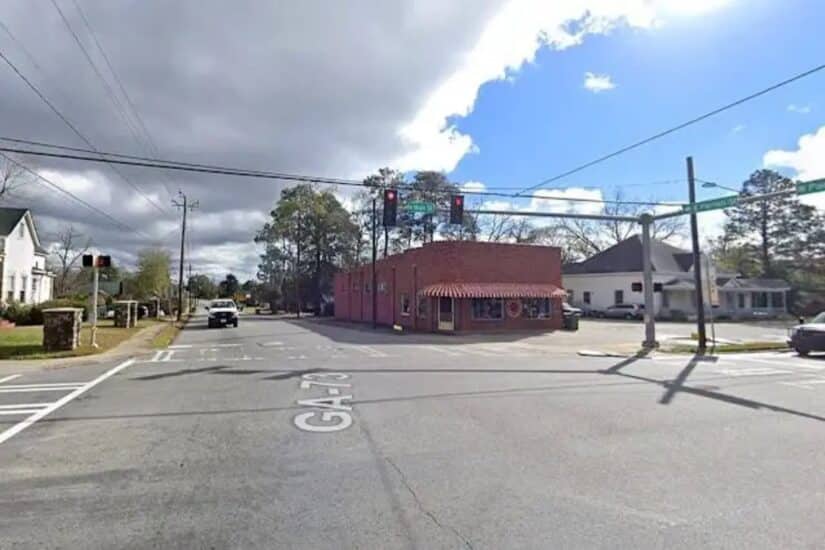
A tragic pedestrian collision in Statesboro has left a 57-year-old woman dead after she was struck by a commercial truck while crossing GA-73. According to the Georgia State Patrol, the incident occurred around 8:42 a.m. and involved a pedestrian riding a tricycle through a marked crosswalk. The crash underscores the risks pedestrians face, especially at busy intersections where traffic signals and timing play critical roles in roadway safety incidents that personal injury lawyers often review when helping families understand their legal rights after fatal pedestrian-truck crashes.
Details of the Fatal Collision on GA-73
Georgia State Patrol (GSP) responded to the scene of a vehicle-versus-pedestrian crash within the city limits of Statesboro on Tuesday morning. When the responding Trooper arrived, the pedestrian was unconscious and CPR was already being performed using a LUCAS automated compression device.
Officials determined that the pedestrian—a 57-year-old woman later identified through fingerprint scanning—had been riding a tricycle northbound across GA-73 within a marked crosswalk. She had entered the roadway from the south shoulder of East Parrish Street.
Initial Investigation Findings
According to GSP:
- The crosswalk signal displayed a stop/don’t walk hand signal for pedestrians at the time the woman entered the crosswalk.
- A commercial truck traveling east on East Parrish Street had a green traffic signal.
- The truck struck the tricycle with its front bumper as it proceeded through the intersection.
The woman had no identification on her person, and authorities used fingerprint technology to confirm her identity.
Conflicting Early Reports From the Scene
Shortly after the crash, a nearby business owner contacted the media, prompting questions regarding the condition of the cyclist. Statesboro Police confirmed that a crash involving a bicycle and a motor vehicle occurred, but deferred all investigative authority to the Georgia State Patrol.
This is common when pedestrian fatalities involve state routes or commercial vehicles, as GSP often takes the lead on gathering evidence, documenting the scene and determining contributing factors.
Understanding Pedestrian Crosswalk Signals
The investigation notes that the woman entered the marked crosswalk against a stop/don’t walk signal. Disregarding crosswalk indicators can place pedestrians in the direct path of moving traffic, especially at intersections with multiple lanes and heavy commercial flow.
Crosswalk signals matter because they:
- Dictate when it is safe for pedestrians to enter the roadway
- Coordinate with traffic light cycles
- Protect pedestrians from turning or through-traffic
- Reduce conflicts between vehicles and foot traffic
Even when a crosswalk is clearly marked, timing is critical. Entering during a prohibited signal can leave pedestrians vulnerable to oncoming vehicles that legally have the right of way.
Pedestrian Crashes Involving Commercial Trucks
Collisions involving commercial trucks often result in severe or fatal injuries due to:
- Larger vehicle size
- Higher stopping distances
- Limited visibility around the truck’s front and sides
- Greater impact force even at moderate speeds
When a pedestrian or cyclist is struck by a commercial vehicle, the injuries are frequently catastrophic. In this case, despite immediate CPR intervention, the woman succumbed to her injuries shortly after arrival at the hospital.
Why Pedestrian Crashes Often Occur at Busy Intersections
Intersections like East Parrish Street and GA-73 see heavy daily traffic with a mix of commercial trucks, local drivers, cyclists and pedestrians.
Common risk factors include:
1. Misjudging Signal Timing
Pedestrians may assume they have time to cross even when the signal advises otherwise.
2. Complex Traffic Flow
Multiple turning lanes, large vehicles and differing light cycles can create confusion.
3. Driver Expectation
Drivers rely on signals to anticipate pedestrian movement and may not expect someone entering the crosswalk when the signal forbids it.
4. Limited Visibility
Commercial trucks and larger vehicles can block sight lines for both drivers and pedestrians.
5. Increased Bicycle and Pedestrian Activity
Urban areas like Statesboro see rising pedestrian use, elevating collision risk.
Challenges Investigators Face in Pedestrian Fatalities
Pedestrian crashes require detailed analysis because the dynamics differ significantly from vehicle-to-vehicle collisions. Investigators examine:
- Signal timing and sequence
- Pedestrian movement
- Vehicle speed and braking
- Placement of debris and impact marks
- Surveillance or traffic camera footage
- Statements from witnesses
- Medical findings
Because the pedestrian entered during a stop signal, investigators will confirm whether timing contributed directly to the collision or whether other factors, such as visibility or vehicle trajectory, played a role.
Identifying the Pedestrian Using Fingerprint Technology
Authorities reported that the woman did not carry identification at the time of the collision. In fatal incidents, fingerprint scanners are often used when immediate identification is necessary, especially for notifying next of kin and obtaining medical history.
This underscores the importance of carrying identification when walking or cycling, particularly in areas with busy intersections.
Why These Fatal Accidents Have Widespread Impact
Fatal pedestrian crashes affect more than the individuals involved. Families experience sudden loss and emotional shock, while communities are reminded of safety challenges on local roadways.
Families often face:
- Immediate grief and trauma
- Medical and funeral expenses
- Delayed or limited information from investigators
- Difficulty understanding what occurred in the final moments
- Challenges navigating insurance claims
The suddenness of pedestrian fatalities often compounds emotional distress.
Pedestrian Safety Reminders for Statesboro Residents
This tragedy highlights the importance of following crosswalk instructions, especially at high-traffic intersections.
Key reminders include:
- Only enter crosswalks when the walk signal is displayed
- Avoid assuming all lanes of traffic have stopped
- Stay alert when using bicycles or tricycles in marked pedestrian areas
- Make eye contact with approaching drivers when possible
- Be cautious around intersections with commercial truck traffic
While not all crashes can be prevented, awareness and caution help reduce risk.
What Families Should Know After a Fatal Pedestrian Crash
Families often have questions about what happens next, including:
- Accessing police and GSP reports
- Understanding preliminary and final cause-of-death findings
- Navigating insurance communications
- Determining responsibility
- Preserving evidence
- Understanding timelines for investigations
- Seeking clarity on rights and options
Having access to accurate information during such a difficult time can make a meaningful difference.
About Ted Law Firm
At Ted Law Firm, supports individuals and families facing the painful aftermath of fatal pedestrian collisions.We serve families across Aiken, Anderson, Charleston, Columbia, Greenville, Myrtle Beach, North Augusta and Orangeburg. Our team understands the emotional, financial and legal challenges families experience during these moments. We are committed to providing clear and dependable communication to help families understand their options as they navigate the aftermath of tragedy.Contact us today for a free consultation.