
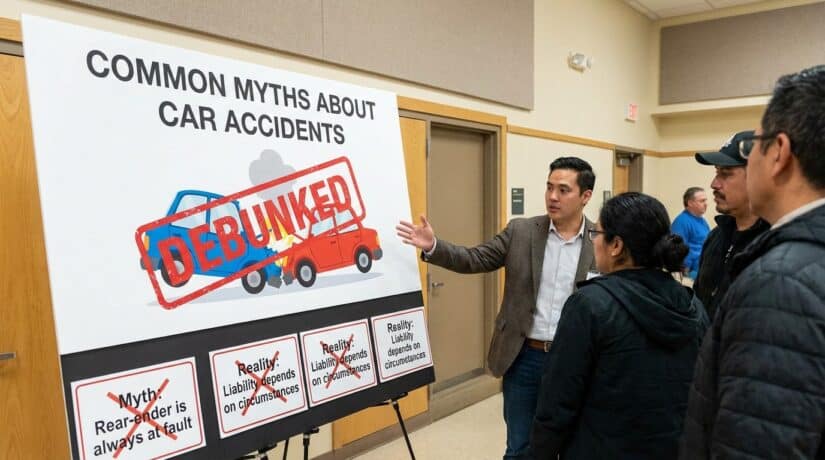
When it comes to road safety, misinformation can be just as dangerous as reckless driving. Many drivers unknowingly rely on myths about car accidents that affect how they behave behind the wheel and how they respond after a crash misconceptions a car accident lawyer frequently encounters when helping victims understand their rights after a collision.
Believing these myths can increase the risk of injury, delay proper medical care, and create serious problems after an accident. Understanding the facts helps drivers make safer choices and respond correctly when collisions occur.
Below are some of the most common car accident myths and the truth behind them.
Myth 1: Seat Belts Are Unnecessary for Short Drives
Many drivers believe they do not need to wear a seat belt when traveling short distances or driving on familiar roads. This belief is incorrect.
A significant number of fatal crashes occur within a few miles of home and at relatively low speeds. Accidents often happen during routine trips because drivers let their guard down.
Wearing a seat belt every time you drive is one of the most effective ways to reduce serious injury or death.
Myth 2: Hands-Free Devices Make Phone Use Safe While Driving
Hands-free phone use may keep your hands on the wheel, but it does not remove distraction. The real danger lies in cognitive distraction.
When your mind is focused on a conversation, it cannot fully focus on driving. Reaction times slow, awareness decreases, and decision-making suffers.
The safest approach is to avoid phone use altogether while driving.
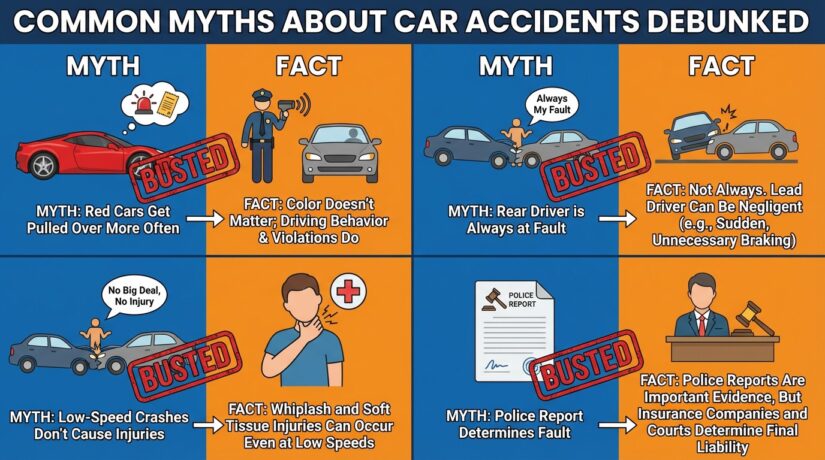
Myth 3: Red Cars Get Into More Accidents
There is no evidence that car color affects accident rates. Insurance companies do not charge higher premiums based on color because accidents are not linked to paint choice.
Crashes are influenced by driver behavior, road conditions, traffic patterns, and vehicle safety features, not appearance.
Myth 4: Bad Weather Causes Most Accidents
While rain and snow can be hazardous, most crashes actually occur in clear weather. Drivers tend to be more cautious when conditions are poor.
In good weather, overconfidence, speeding, and distraction are more common. These behaviors contribute more to accidents than weather itself.
Myth 5: Newer Cars Are Always Safer Than Older Ones
Newer vehicles often include updated safety features, but that does not automatically make them safer than older models.
A well-maintained older vehicle with functional brakes, tires, lights, and safety systems can perform just as safely. Vehicle condition and driver behavior matter more than age alone.
Myth 6: Good Drivers Do Not Get Into Accidents
Even cautious and attentive drivers can be involved in crashes. Other drivers’ mistakes, road hazards, mechanical failures, and unexpected conditions all play a role.
This myth can lead to misplaced blame and prevent injured individuals from recognizing their rights after an accident.
Myth 7: You Do Not Need to Report Minor Accidents
There is no such thing as a truly minor accident. What seems small at first can later involve injuries or disputes.
Reporting an accident creates an official record that can be important if symptoms appear later or disagreements arise. In many cases, reporting is also legally required.
Myth 8: You Should Always Move Your Car After an Accident
While safety is the priority, moving vehicles too soon can destroy important evidence.
If the crash creates a serious hazard, moving to a safer location may be necessary. Otherwise, it is often best to leave vehicles where they are until law enforcement documents the scene.
Myth 9: Feeling Fine Means You Are Not Injured
Many injuries do not show symptoms immediately. Adrenaline can mask pain, and conditions like whiplash, concussions, and internal injuries may take time to appear.
Seeking medical attention after an accident protects both your health and your ability to document injuries properly.
Myth 10: Partial Fault Means No Compensation
In many states, injured individuals can still recover compensation even if they share some responsibility for an accident.
Comparative negligence laws allow recovery based on the percentage of fault. Compensation may be reduced but is not automatically eliminated.
Myth 11: An Uninsured Driver Leaves You Without Options
If the at-fault driver lacks insurance, other options may still exist. Many drivers carry uninsured or underinsured motorist coverage designed for these situations.
This coverage helps protect drivers when others fail to carry adequate insurance.
Myth 12: Insurance Companies Always Act Fairly
Insurance companies operate as businesses. Their goal is often to minimize payouts, not maximize fairness.
Quick settlement offers may not reflect the true cost of injuries, lost income, or long-term impact. Accepting too soon can limit future options.
Myth 13: Minor Injuries Do Not Need Legal Help
Injuries that seem minor can become serious over time. Medical bills, missed work, and ongoing treatment add up quickly.
Early decisions can affect long-term outcomes, especially when injuries worsen after a claim is settled.
Myth 14: Working With an Attorney Is Too Expensive
Many people avoid seeking legal guidance because they worry about cost. In reality, legal fees are often structured so clients do not pay upfront.
Understanding options early can prevent costly mistakes and protect long-term interests.
Why These Myths Matter
Believing misinformation leads to unsafe driving habits and poor decisions after accidents. Myths can delay medical care, prevent proper documentation, and reduce awareness of legal rights.
Accurate information empowers drivers to protect themselves, their passengers, and others on the road.
Understanding Your Rights After an Accident
When injuries occur due to someone else’s actions, understanding your rights is essential. The steps taken immediately after an accident can affect physical recovery and future stability.
Knowing the truth helps individuals make informed decisions during stressful and uncertain situations.
About Ted Law Firm
At The Ted Law Firm, is a South Carolina law firm representing individuals and families affected by serious injury and motor vehicle accidents. We serve families across Aiken, Anderson, Charleston, Columbia, Greenville, Myrtle Beach, North Augusta and Orangeburg. The firm is known for its client-centered approach, strong preparation, and commitment to accountability. Ted Law Firm serves communities across South Carolina, providing guidance and support during challenging moments. Contact us today for a free consultation.