
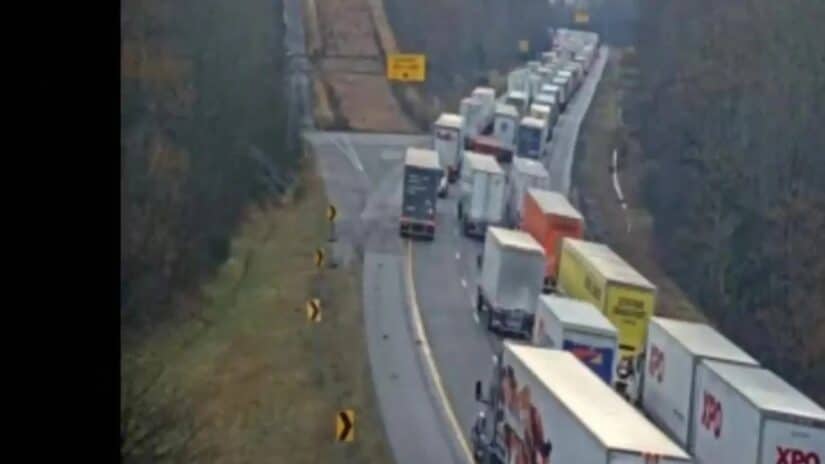
A serious early morning crash brought traffic to a standstill on I-24 eastbound in Marion County, Tennessee, causing significant traffic congestion and delays for motorists. The incident occurred before sunrise and forced authorities to completely halt traffic flow while emergency responders secured the scene and redirected vehicles onto alternate county roads, a type of interstate collision a car accident lawyer often reviews when crashes disrupt travel and raise injury or liability concerns.
Crashes on major interstate routes often highlight the broader challenges facing public infrastructure across the country. From county road safety to bridge replacement and road resurfacing projects, transportation agencies nationwide continue to address risks tied to aging infrastructure and increased traffic volume.
What Happened on I-24 Eastbound
According to early reports, the crash occurred just before 6 a.m. near mile marker 139. The Tennessee Department of Transportation confirmed that traffic was fully stopped for several hours before diversions were implemented. Motorists experienced delays as vehicles were rerouted onto nearby roads while law enforcement worked to stabilize the scene.Similar highway shutdowns are seen across the country during serious incidents, including routes maintained by agencies such as the Ohio Department of Transportation and the Texas Department of Transportation. These agencies frequently manage road projects, construction projects, and emergency responses that impact daily transportation.
Traffic Diversions and Emergency Response
Traffic was completely halted before the Tennessee Highway Patrol initiated diversions to relieve congestion. Comparable strategies are used by agencies like the Ohio State Highway Patrol and county engineer offices nationwide, including the Lucas County Engineer’s Office, Mercer County Engineer, Montgomery County Engineer, and Morrow County Engineer.
Managing traffic flow during a major crash requires coordination across multiple agencies, including emergency services, transportation departments, and local government offices. These responses are often influenced by transportation budgets, federal funding, and guidance from the U.S. Department of Transportation.
Interstate Safety and Infrastructure Challenges
High-speed interstates like I-24 create serious risks during crashes. Collisions at high speed often lead to severe damage and injuries. Meanwhile, officials continue to improve infrastructure across the country. Projects include bridge reconstruction, road resurfacing, and utility upgrades. Engineers in regions like Northwest Ohio, Scioto County, and Cuyahoga County actively manage these projects. They also oversee bridge replacements and preservation work. Federal grants and the Ohio Public Works Commission fund many of these efforts. Major structures like the Brent Spence Bridge and State Route 8 Bridge show how safety and traffic concerns connect with public investment.
Broader Transportation Context
Transportation safety extends beyond one state. Agencies such as the Ohio Department of Natural Resources and the Ohio Department of Development support planning efforts. They also assist during emergencies and severe weather. Large events like hurricanes or national gatherings require careful coordination. For example, Hurricane Helene and Hurricane Milton created major transportation challenges. Similarly, events like the Ohio State Fair and NCAA Men’s Final Four increase traffic demand. In addition, discussions about electric vehicles and charging stations shape future road systems.
Reopening of I-24
Authorities reopened I-24 eastbound around 10 a.m. However, traffic remained slow as vehicles moved through the area. Law enforcement urged drivers to stay alert and avoid distractions. Drivers should also adjust their speed during recovery periods. Emergency teams often coordinate reopenings through operations centers. These centers ensure safety even after traffic resumes.
Investigation Ongoing
Officials continue to gather details about the crash. Investigators are reviewing road conditions, driver actions, and visibility. They will also examine infrastructure factors that may have contributed. In some cases, agencies use advanced research to improve road safety. For example, the NASA Glenn Research Center supports studies on materials and roadway design.
Legal and Insurance Considerations After Highway Crashes
Highway crashes can cause serious injuries, including brain injuries. These incidents often lead to complex insurance claims. Therefore, understanding comparative negligence laws is important. Fault decisions can affect compensation outcomes. Accidents involving commercial vehicles may raise additional concerns. These include insurance coverage and maintenance responsibility. Driver training, road salting, and safety standards also play key roles in prevention.
Transportation Safety Beyond Tennessee
Similar crashes occur on major highways across the country. Routes like Interstate 10, Loop 1604, and Loop 410 often face heavy congestion. Areas near UTSA Boulevard and Fiesta Texas report similar issues. Law enforcement agencies frequently respond to these incidents. Their efforts highlight the nationwide nature of traffic safety challenges.
Public Awareness and Preparedness
Major events can disrupt traffic patterns. For example, a solar eclipse can cause sudden congestion. Therefore, agencies must plan ahead and coordinate responses. Emergency teams such as Ohio Task Force 1 and the Ohio National Guard assist during large incidents. Public awareness campaigns also support safer travel behavior.
Community Impact and Accountability
Traffic incidents affect more than drivers. They impact emergency services, public transit, and local economies. Therefore, thorough investigations remain essential. They help improve safety and prevent future crashes. Infrastructure upgrades, such as road repairs and fiber-optic installations, also support safer travel. Each improvement strengthens the overall transportation system.
About Ted Law Firm
At Ted Law Firm, stands with individuals and families affected by serious roadway accidents. We serve families across Aiken, Anderson, Charleston, Columbia, Greenville, Myrtle Beach, North Augusta and Orangeburg. The firm understands the physical, emotional, and financial challenges that follow major collisions and remains committed to accountability, clarity, and client trust. Through careful case evaluation and attention to detail, Ted Law Firm helps clients navigate complex situations with confidence and dignity. Contact us today for a free consultation.