
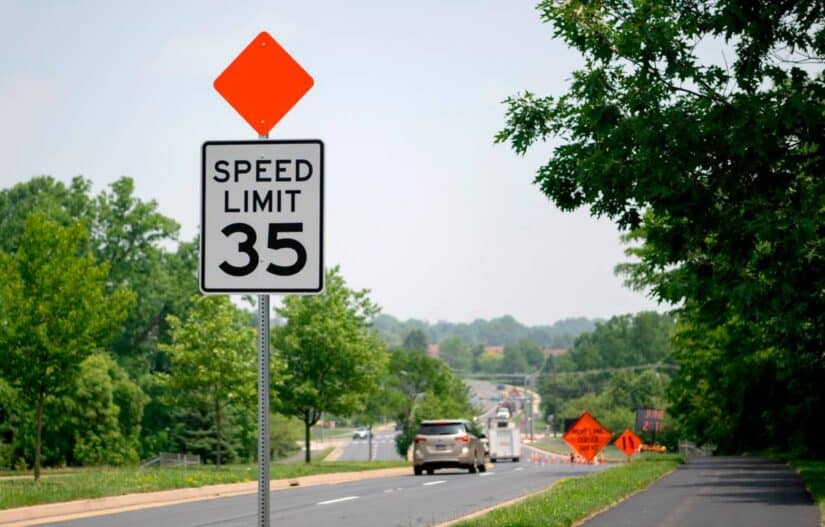
Many South Carolina drivers believe that going less than 10 miles per hour over the posted speed limit is acceptable, especially when keeping up with the flow of traffic. It is a common assumption that law enforcement officers will not stop a driver who is moving with other vehicles and staying under that unofficial 10 mph cushion.
However, South Carolina law does not recognize this belief as a legal defense. The idea that “everyone else was doing it” or that driving slightly over the limit is harmless can still result in a traffic stop, a citation, fines, and points on a driving record.
Understanding what the law actually says is essential for every driver on South Carolina roads.
What South Carolina Law Says About Speeding
Under Section 56-5-1520 of the South Carolina Code of Laws, drivers must not exceed posted speed limits. The statute makes it clear that the listed speed limits are maximum lawful speeds.
The law states that a person shall not drive a vehicle on a highway at a speed greater than is reasonable and prudent under the conditions. It further requires that speed must be controlled to avoid colliding with a person or vehicle.
This means that the posted speed limit is not a suggestion. It is the maximum legal speed. Even if traffic is moving faster, exceeding the posted limit can still result in a citation.
Additionally, the law emphasizes that speed must be reasonable for current conditions. Weather, road surface, traffic congestion, and visibility all factor into what is considered safe and lawful.
Maximum Speed Limits in South Carolina
South Carolina sets different maximum speed limits depending on the type of road and area. These include:
- 70 mph on interstates where posted
- 60 mph on multi lane divided primary highways where posted
- 55 mph in other locations unless otherwise posted
- 55 mph maximum for manufactured homes, which is typically 10 mph below the posted limit
- 40 mph on unpaved roads
- 30 mph in urban districts
These are maximum lawful speeds. Driving even 5 to 9 mph over these limits technically violates the law.
The misconception that officers ignore drivers who are under 10 mph over the limit likely developed over time due to discretionary enforcement practices. However, officer discretion does not change what the law allows.
Can You Be Pulled Over for Driving Less Than 10 MPH Over?
Yes. A law enforcement officer can legally stop a driver for exceeding the posted speed limit by any amount. There is no statutory buffer that permits drivers to exceed the limit by 5 or 9 mph.
While some officers may choose not to cite drivers for minor infractions depending on circumstances, this is not guaranteed. Traffic enforcement decisions can depend on factors such as:
- Location of the violation
- Traffic density
- School or construction zones
- History of complaints about speeding in the area
- Officer discretion
The fact that other vehicles are speeding does not provide legal protection. Each driver is individually responsible for obeying the law.
Fines and Penalties for Speeding in South Carolina
Speeding fines in South Carolina vary depending on how far over the limit a driver is traveling.
The typical fine ranges include:
- Up to 10 mph over: $15 to $25
- 11 to 15 mph over: $25 to $50
- 16 to 25 mph over: $50 to $75
- Above 25 mph over: $75 to $200 or imprisonment for up to 30 days
These fines may not reflect additional court costs, administrative fees, or increased insurance premiums. Accumulating points on a driving record can also lead to license suspension if thresholds are reached.
For drivers who believe that a minor speed increase is harmless, the financial and legal consequences can quickly outweigh any perceived benefit.
Does Speeding Actually Save Time?
One of the most common justifications for speeding is saving time. Many drivers assume that going 10 mph faster than the limit will significantly shorten their commute.
However, studies suggest that the time saved is often minimal.
AAA has examined typical commute scenarios. For example, on a 15 mile commute with a 35 mph speed limit, increasing speed to 45 mph may save around six minutes under ideal conditions.
But real world driving conditions are rarely ideal. Red lights, traffic signals, congestion, construction zones, and merging traffic frequently eliminate those small time gains.
AAA notes that any time gained by speeding is often lost at the next traffic light or intersection.
HiRoad.com has also raised the question of whether a few minutes are worth the increased risk of crashes, tickets, and insurance consequences.
The U.S. Army has studied the issue as well and found that the higher the speed limit, the less time drivers actually save by exceeding it.
In many situations, speeding reduces travel time by seconds rather than minutes.
The Safety Risks of Speeding
Beyond legal consequences, speeding significantly increases crash risk. According to the National Highway Traffic Safety Administration, speed was a factor in approximately 30 percent of all crashes. In 2023 alone, more than 11,500 people were killed in speed related crashes nationwide.
Higher speeds reduce reaction time, increase stopping distance, and intensify crash impact forces.
Even small increases in speed can have measurable effects. A vehicle traveling at 45 mph requires substantially more stopping distance than one traveling at 35 mph. In urban environments with pedestrians, cyclists, and intersections, these differences can be life changing.
Speed also affects the severity of injuries in a collision. The faster a vehicle travels, the greater the force transferred during impact.
The “Flow of Traffic” Argument
Many drivers justify speeding by saying they were keeping up with traffic. While it may feel safer to move with the flow rather than drive slower than surrounding vehicles, this does not override the posted speed limit.
Courts generally do not accept the argument that “everyone else was doing it” as a legal defense. The responsibility to obey traffic laws applies to each individual driver.
In some situations, driving significantly below the speed of traffic can create hazards. However, that does not authorize exceeding the maximum lawful speed.
Drivers who feel pressured by faster vehicles behind them can consider moving to the right lane or allowing others to pass when safe.
How Speeding Tickets Can Affect Drivers Long Term
A speeding ticket is more than just a fine. It can impact:
- Insurance premiums
- Driving record points
- License status
- Employment opportunities that require a clean driving history
Multiple violations may lead to license suspension. For commercial drivers, consequences can be even more serious.
Additionally, if a speeding driver is involved in a crash, the violation can influence liability determinations in civil claims.
Civil Liability in Speed Related Crashes
When a crash occurs and speeding is involved, it often becomes a central issue in civil litigation.
In personal injury cases, plaintiffs must prove that a driver acted negligently and that the negligence caused damages. Exceeding the speed limit can serve as evidence of a breach of duty.
If a driver was traveling even slightly above the posted limit at the time of a collision, that fact may be introduced in court.
In wrongful death cases, speeding can significantly impact damage calculations and fault allocation.
Understanding how traffic violations intersect with civil liability is crucial for anyone involved in a serious crash.
Why Obeying Posted Limits Matters
Speed limits are established based on road design, traffic patterns, accident history, and surrounding land use.
Urban areas often have lower limits because of higher pedestrian activity. Rural highways may allow higher speeds due to reduced intersections and foot traffic.
When drivers exceed posted limits, even slightly, they increase risk for themselves and others.
The law requires drivers to operate at a speed that is both lawful and reasonable under the conditions. That includes adjusting for rain, fog, heavy traffic, or construction.
What To Do If You Receive a Speeding Ticket
If you are stopped for speeding in South Carolina, remain calm and respectful. Avoid arguing roadside. You have the right to address the citation through proper legal channels.
Options may include:
- Paying the fine
- Requesting a court hearing
- Exploring possible defenses
- Reviewing whether the citation was properly issued
In cases where speeding is connected to a crash or injury, legal guidance becomes even more important.
Final Thoughts on the 10 MPH Myth
The belief that driving less than 10 mph over the speed limit is acceptable in South Carolina is a myth. The law does not provide a grace margin.
While some officers may use discretion in enforcement, drivers cannot rely on that discretion as protection.
Speed limits are maximum lawful speeds. Driving within them reduces legal exposure, financial risk, and the likelihood of serious injury.
The few minutes potentially saved by speeding are rarely worth the potential consequences.
About Ted Law
At Ted Law Firm, is a Georgia based personal injury law firm dedicated to protecting the rights of individuals harmed in serious accidents. We serve families across Aiken, Anderson, Charleston, Columbia, Greenville, Myrtle Beach, North Augusta and Orangeburg. The firm is committed to pursuing accountability when negligence causes injury and to guiding clients through complex legal matters with professionalism and care. Contact us today for a free consultation.