
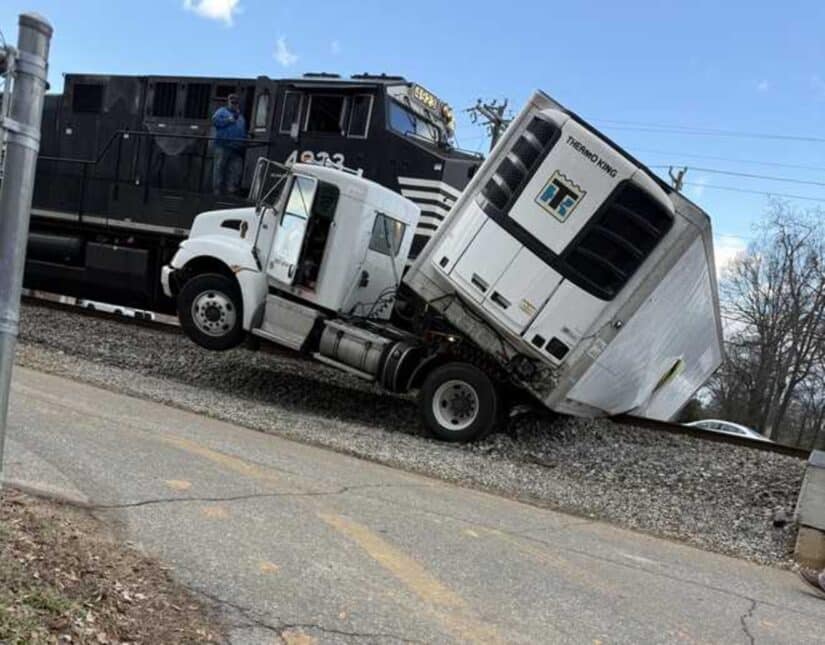
A serious transportation incident occurred in Greer, South Carolina, when a train struck an 18 wheeler that was stuck on railroad tracks. Although no injuries were reported, the collision caused major disruption and raised important concerns about railroad crossing safety and commercial truck operation, issues that a personal injury lawyer may later evaluate when train and truck collisions result in catastrophic harm.
According to the Greer Police Department, officers were dispatched around 4:40 p.m. to the area of 4th Street and Moore Street after receiving reports of an 18 wheeler stuck on the Norfolk Southern Railroad tracks. While the truck remained immobilized on the crossing, it was struck by a Norfolk Southern train.
Authorities confirmed that the driver of the truck was not inside the vehicle at the time of the collision. Fortunately, no injuries were reported. However, multiple railroad crossings were blocked as crews worked to remove the damaged truck and clear the tracks.
What Happened in Greer
Law enforcement responded to the scene after being notified that a commercial truck had become stuck on the railroad tracks near 4th Street and Moore Street. The 18 wheeler was positioned on the Norfolk Southern tracks when a train approached the crossing.
Before the train could come to a complete stop, it collided with the truck. Officers later confirmed that the driver had exited the vehicle before impact. The absence of injuries is significant, given the force typically involved in train collisions.
Following the crash, several railroad crossings were blocked, including:
- 4th Street
- School Street
- Trade Street
- Able Street
- S. Line Street
Officials stated that these crossings would remain closed for an undetermined amount of time while crews safely removed the 18 wheeler and inspected the railroad infrastructure. Drivers were advised to avoid the area and use alternate routes.
Why Trucks Become Stuck on Railroad Tracks
Commercial trucks can become stuck on railroad crossings for several reasons. Railroad crossings are designed to accommodate many types of vehicles, but certain conditions increase the risk of a truck becoming immobilized.
Low Ground Clearance
Some trailers have low ground clearance, which can cause the underside of the trailer to become lodged on raised or uneven tracks.
Steep or Uneven Crossings
Sharp inclines or declines approaching railroad crossings can cause longer trailers to bottom out, especially when fully loaded.
Mechanical Failure
Engine trouble, transmission issues, or brake failure may prevent a truck from clearing the tracks in time.
Traffic Conditions
Heavy traffic can force a truck to stop while partially positioned on the tracks, increasing the risk of collision.
Driver Misjudgment
Drivers unfamiliar with the area may miscalculate the angle, elevation, or available clearance at a crossing.
Determining the exact cause of a truck becoming stuck is essential when evaluating responsibility for a collision.
The Dangers of Train and Truck Collisions
Train collisions with commercial trucks are extremely dangerous. Trains require a long distance to stop, even when emergency braking is applied. Once a train operator identifies an obstruction on the tracks, there may be limited time to avoid impact.
When a train strikes an 18 wheeler, the consequences often include:
- Severe damage to the truck
- Damage to railroad equipment
- Track damage
- Extended road closures
- Risk of hazardous material exposure
In many cases, such collisions lead to serious injuries or fatalities. The fact that no one was injured in this Greer incident is fortunate.
Railroad Crossing Safety Responsibilities
Railroad crossings involve shared responsibility between drivers, trucking companies, and railroad operators.
Commercial drivers are expected to:
- Approach crossings cautiously
- Ensure there is sufficient space beyond the tracks before proceeding
- Avoid stopping on the tracks
- Follow all posted warning signals
Railroad companies are responsible for maintaining crossings, signals, and warning systems. Malfunctioning lights, gates, or crossing surfaces can increase the likelihood of accidents.
If a vehicle becomes stuck, drivers are advised to immediately exit the vehicle and contact the emergency number posted at the crossing. Quick action can prevent serious injuries.
Determining Liability After a Railroad Collision
Even when no injuries occur, train and truck collisions can result in significant property damage and legal claims. Determining liability requires a thorough investigation.
Potentially responsible parties may include:
The Truck Driver
If driver error contributed to the vehicle becoming stuck, liability may rest with the driver.
The Trucking Company
Commercial carriers must ensure proper driver training, vehicle maintenance, and route planning. Failures in these areas may increase responsibility.
The Railroad Company
If crossing signals were malfunctioning or the crossing design was unsafe, the railroad company may share liability.
Government Entities
If roadway design or maintenance issues contributed to the incident, a municipal or state agency may be involved in the investigation.
Establishing fault often involves reviewing maintenance records, driver logs, surveillance footage, and data from onboard systems.
Impact on the Greer Community
Following the collision, several railroad crossings in Greer were blocked. Extended closures can disrupt traffic flow, delay emergency services, and affect local businesses.
Residents were urged to avoid the affected streets and use alternate routes while recovery operations continued. Removing a large commercial truck from railroad tracks requires specialized equipment and coordination between police, railroad crews, and heavy recovery operators.
Safety inspections must also confirm that the tracks remain safe for train operations before service resumes.
Commercial Truck Regulations and Safety Standards
Commercial trucking is regulated by both federal and state laws. These regulations cover driver qualifications, hours of service, vehicle inspections, and safety compliance.
Violations of safety standards can increase liability in the event of a collision. Even in cases without injuries, regulatory noncompliance may lead to financial penalties and civil disputes.
Proper training and awareness of crossing hazards are essential components of commercial vehicle safety.
Legal Considerations in Property Damage Claims
Although no injuries were reported in this case, property damage claims may still arise. These claims can involve:
- Damage to the truck
- Damage to the train
- Costs associated with track repairs
- Business interruption losses
Insurance companies typically play a central role in resolving these disputes. Determining fault directly impacts how damages are allocated.
Preventing Future Railroad Crossing Incidents
Incidents like this serve as reminders of the importance of caution at railroad crossings. Preventative steps include:
- Careful route planning for large trucks
- Avoiding crossings with steep approaches when possible
- Confirming adequate clearance before proceeding
- Maintaining vehicles to reduce the risk of breakdowns
Railroad companies and municipalities may also review crossing design and safety features after a collision to determine whether improvements are needed.
Moving Forward After Transportation Accidents
The collision between the Norfolk Southern train and the 18 wheeler in Greer could have resulted in devastating consequences. Fortunately, no injuries were reported. However, the incident highlights the serious risks associated with railroad crossings and commercial trucking operations.
Thorough investigations help determine what went wrong and how similar incidents can be prevented in the future. Accountability, when appropriate, plays an important role in improving transportation safety.
About Ted Law
At Ted Law Firm, represents individuals and families across South Carolina who have been affected by serious transportation incidents. We serve families across Aiken, Anderson, Charleston, Columbia, Greenville, Myrtle Beach, North Augusta and Orangeburg. The firm is committed to protecting the rights of those facing complex legal issues following vehicle and commercial truck collisions. Contact us today for a free consultation.