
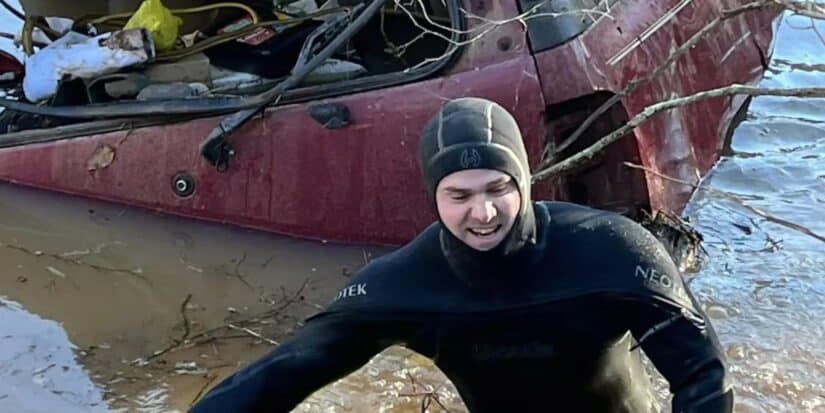
A crash in Sumter County led to a dramatic scene when a vehicle became partially submerged in Philema Pond. According to reports, the accident occurred Sunday near the intersection of Hooks Mill Road and Indian Road. Emergency crews responded quickly, only to find the vehicle sitting in the water and uncertainty surrounding the driver’s whereabouts, a situation that a car accident lawyer may later examine when drivers leave the scene after a crash.
Sumter County Fire Rescue arrived on scene and located the vehicle in the pond. Concerned that occupants could still be inside, officials deployed the department’s dive team to search for potential victims. Fortunately, authorities later confirmed that the driver had self extricated from the vehicle and left the scene prior to first responders arriving. No injuries were reported, and a local towing service removed the vehicle using a tow strap.
Although this incident ended without reported injuries, it raises important legal and safety questions, particularly when a driver leaves the scene of a crash.
What Happened at Philema Pond
The crash took place near Hooks Mill Road and Indian Road in Sumter County. Details about what caused the vehicle to leave the roadway have not yet been released. It remains unclear whether factors such as speed, road conditions, driver distraction, mechanical failure, or weather played a role.
When emergency personnel arrived, they were faced with a potentially life threatening situation. A vehicle submerged in water creates immediate concern for trapped occupants. Dive teams are trained to respond swiftly in these circumstances because time is critical in water related emergencies.
After searching the pond, authorities confirmed that the driver had already exited the vehicle and departed the area. No other victims were located, and no injuries were reported.
The Risks of Vehicles Entering Water
When a vehicle leaves the roadway and enters a body of water, the risks increase dramatically. Even partial submersion can lead to:
- Rapid water entry into the cabin
- Electrical system failure
- Limited visibility
- Difficulty opening doors due to water pressure
- Panic and disorientation
Water related crashes can become fatal within minutes if occupants are unable to escape. Self extrication, when possible, requires quick decision making and calm action.
The outcome in this case could have been far more severe had anyone remained trapped inside the vehicle.
Legal Implications of Leaving the Scene
One of the most significant aspects of this incident is that the driver left before authorities arrived. Under Georgia law, drivers involved in crashes have specific responsibilities. These duties may include:
- Stopping at the scene
- Checking for injuries
- Rendering reasonable assistance if needed
- Exchanging information
- Reporting the accident when required
Leaving the scene of an accident, even when no injuries appear to have occurred, can lead to legal consequences. Law enforcement often investigates whether the departure violated state traffic laws or whether mitigating circumstances existed.
In situations involving property damage or potential danger to others, authorities typically expect drivers to remain present until first responders complete their initial assessment.
Investigating the Cause of the Crash
Even though no injuries were reported, an investigation into the crash may still occur. Officials often examine:
- Roadway conditions at the time of the incident
- Tire marks and vehicle damage
- Possible mechanical issues
- Weather conditions
- Driver behavior prior to the crash
If another vehicle was involved or if roadway hazards contributed to the accident, additional liability questions could arise.
When vehicles enter ponds or other bodies of water, investigators also evaluate environmental impact and property damage. Recovery efforts may involve coordination with local authorities to ensure safety and environmental protection.
Property Damage and Insurance Considerations
Water damage to a vehicle can be extensive. Even partial submersion often results in:
- Engine damage
- Electrical system failure
- Interior contamination
- Structural corrosion
Insurance coverage may depend on the type of policy in place. Comprehensive coverage typically addresses non collision related water damage, while collision coverage may apply if another vehicle was involved.
Drivers who leave the scene before reporting the incident may complicate insurance claims. Prompt reporting and cooperation with investigators generally help facilitate smoother claims processes.
First Responder Challenges in Water Crashes
For emergency personnel, arriving at a crash scene involving water presents unique challenges. Dive teams must assess:
- Water depth
- Visibility conditions
- Potential hazards beneath the surface
- The stability of the submerged vehicle
In this case, the dive team searched Philema Pond to ensure no victims were trapped inside the vehicle. These precautionary measures are critical because submerged vehicles can quickly turn into rescue or recovery operations.
The swift response by Sumter County Fire Rescue likely prevented unnecessary delays in determining whether lives were at risk.
Potential Liability Beyond the Driver
Although current reports indicate no injuries, accidents involving vehicles entering bodies of water can sometimes involve additional parties. For example:
- Poor roadway design
- Inadequate signage
- Insufficient lighting
- Lack of guardrails
- Hazardous curves
If roadway conditions contributed to the crash, further investigation may evaluate whether maintenance or design issues played a role.
Determining liability requires a careful review of all available evidence. Even single vehicle accidents can raise broader safety concerns.
The Importance of Staying at the Scene
Remaining at the scene of a crash serves several purposes:
- It allows emergency crews to confirm everyone is safe
- It ensures accurate documentation of the incident
- It protects the driver from additional legal complications
- It allows law enforcement to assess any hazards
Departing before authorities arrive can create uncertainty and increase scrutiny during investigations. Even when no injuries are visible, underlying issues such as delayed medical symptoms or environmental damage may exist.
Drivers should understand that compliance with post accident responsibilities is not optional under Georgia law.
Community Safety and Prevention
Roadways near ponds, lakes, and other water features can pose added risks, particularly at night or during inclement weather. Preventative measures that can reduce similar incidents include:
- Proper guardrail installation
- Reflective signage
- Clear lane markings
- Speed enforcement
- Public awareness about hazardous intersections
Local governments and transportation agencies play a vital role in identifying high risk areas and implementing safety improvements.
When Legal Guidance Becomes Important
Even when no immediate injuries are reported, accidents can lead to legal complications. Issues may arise involving:
- Property damage claims
- Insurance disputes
- Allegations of leaving the scene
- Questions about liability
Obtaining clear information about legal rights and responsibilities can help drivers and families navigate uncertain situations.
Crashes involving water can escalate quickly, and outcomes are not always as fortunate as this one. Understanding the law and acting responsibly after an accident are critical steps in protecting oneself and others.
About Ted Law Firm
At Ted Law Firm, Motor vehicle accidents can take many forms, from minor roadway incidents to situations involving submerged vehicles. We serve families across Aiken, Anderson, Charleston, Columbia, Greenville, Myrtle Beach, North Augusta and Orangeburg. Each case presents unique legal considerations.If you or someone you love has been involved in a crash in Georgia, understanding your legal options is essential. Contact us today for a free consultation.