
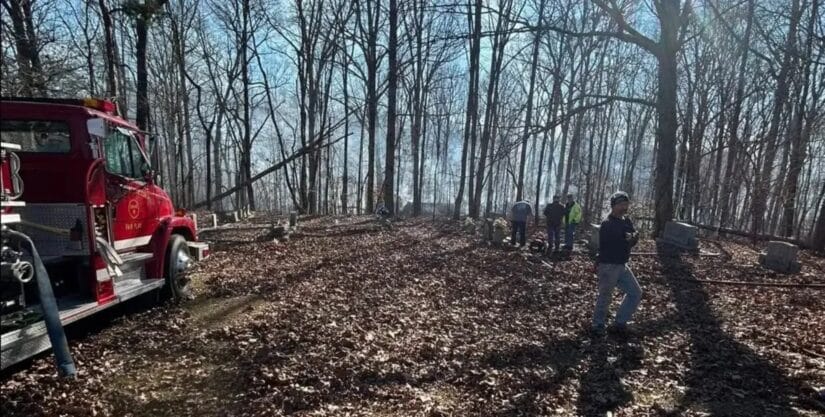
An Oconee County crash occurred while emergency crews were battling a large woods fire on South Union Road, creating a complex and high risk response situation. The incident highlights the dangers drivers face during emergency conditions and why injured victims should seek legal guidance from Ted Law Firm.
Woods Fire Spreads Across Several Acres
On Sunday, fire crews responded to a woods fire off South Union Road in Oconee County, South Carolina. The blaze spread across several acres and required coordinated containment efforts. The South Union Volunteer Fire Department led operations. Surrounding stations provided support.
A bulldozer from the South Carolina Forestry Commission was deployed to help manage the fire line. Heavy equipment is often used in wildland fires to create barriers and prevent further spread. The response required manpower, planning, and constant monitoring of wind direction and terrain.
Large wood fires present serious hazards. Smoke reduces visibility. Heat affects nearby roadways. Drivers traveling through affected areas may face limited sight distance and sudden emergency vehicle activity.
Rollover Crash Reported During Fire Response
As crews prepared to clear the fire scene, a second emergency was reported further down South Union Road. A vehicle rollover crash had occurred. Early reports indicated a driver was trapped inside the vehicle.
Multiple agencies already operating near the fire were redirected to the crash site. Emergency responders often face these overlapping incidents in rural areas. Quick coordination between departments becomes critical when resources are shared.
The crash involved a single vehicle resting on its roof. The driver was pinned inside. This type of rollover accident presents a high risk of serious injury due to roof crush, impact forces, and restraint complications.
Multi Agency Rescue Operation
First responders from Crossroads, South Union, Fair Play, Oakway Rescue, and Oconee County Emergency Services worked together to stabilize the overturned vehicle. Vehicle stabilization prevents movement during extraction. Even slight shifting can worsen injuries.
Rescue teams used specialized tools to access the driver. Hydraulic rescue tools are commonly used to pry open doors and remove structural barriers. Crews “popped” the door and cut the seat belt to safely free the trapped occupant.
Medical support was provided by Prisma EMS. The driver was extracted and transferred for further medical evaluation. Emergency medical teams assess for head trauma, spinal injuries, internal bleeding, and fractures in rollover crashes.
Meanwhile, the South Carolina Forestry Commission continued to manage containment efforts at the woods fire scene. The dual emergency required coordination between fire suppression crews and crash response personnel.
How Emergency Conditions Increase Accident Risks
Vehicle crashes during emergency events are not uncommon. Several factors increase the risk of accidents in these situations:
- Reduced visibility due to smoke
- Distracted driving caused by emergency vehicles
- Sudden traffic slowdowns
- Debris on roadways
- Driver panic or confusion
When drivers encounter flashing lights and emergency responders, they must slow down and proceed with caution. South Carolina law requires motorists to yield to emergency vehicles and move over when possible.
Failure to adjust driving behavior in emergency zones can result in secondary collisions. Even when a crash appears unrelated to the fire, environmental factors may contribute.
Understanding Rollover Accidents
Rollover crashes are among the most dangerous types of motor vehicle accidents. A vehicle may roll due to sharp steering, uneven road surfaces, high speeds, or impact with another object. In rural roads like South Union Road, narrow shoulders and limited lighting may increase risks.
Common injuries in rollover accidents include:
- Traumatic brain injuries
- Spinal cord injuries
- Neck and back trauma
- Broken bones
- Internal organ damage
Seat belts reduce fatality risk. However, even restrained occupants can suffer serious harm when vehicles flip.
When a driver becomes trapped, the danger escalates. Prolonged entrapment may increase medical complications. Rapid extrication by trained crews can reduce long term harm.
Legal Questions After a Serious Crash
After a crash like the one on South Union Road, victims often face significant medical bills and recovery time. Determining liability becomes essential. Several factors may require investigation:
- Road conditions at the time of the crash
- Visibility affected by smoke
- Possible vehicle defects
- Driver behavior
- Emergency response zone conditions
Accident reconstruction experts may review skid marks, vehicle damage, and roadway evidence. Medical records document injury severity and treatment needs.
In some cases, third parties may share responsibility. If roadway hazards contributed to the crash, maintenance records may be reviewed. If another vehicle was involved, insurance coverage becomes a central issue.
The Importance of Prompt Legal Action
South Carolina law limits the time injured individuals have to file a personal injury claim. This deadline is known as the statute of limitations. Missing this deadline can prevent recovery of damages.
Prompt legal action allows preservation of evidence. Photographs, witness statements, and official reports are easier to obtain soon after the event. Delays may weaken a claim.
Victims may be entitled to compensation for:
- Medical expenses
- Future medical care
- Lost wages
- Reduced earning capacity
- Pain and suffering
Each case depends on the specific facts. Insurance companies often begin investigations immediately. Their objective is to minimize payouts.
Coordinated Emergency Responses and Liability Considerations
When multiple agencies respond to simultaneous emergencies, investigations may involve several official reports. Fire department documentation, EMS records, and law enforcement crash reports each contain relevant details.
If smoke from a fire significantly impaired roadway visibility, that condition may become part of the investigation. Road signage and traffic control measures may also be examined.
It is important to determine whether drivers were given adequate warning of hazardous conditions. Emergency vehicle placement, flashing lights, and cones are often used to alert approaching motorists.
These factors can influence liability analysis in personal injury cases.
Community Impact of Dual Emergencies
Events like the Oconee County woods fire and rollover crash demonstrate the strain placed on rural emergency resources. Fire crews must divide attention between containment and rescue. Law enforcement must manage traffic and safety.
Community members may face road closures and delays. Secondary crashes can occur when drivers are unfamiliar with detours or attempt to bypass blocked areas.
Public safety agencies train for these complex scenarios. However, the risk to drivers remains significant during active emergencies.
Insurance Challenges After Rollover Accidents
Insurance claims following rollover crashes can become complicated. Insurers may dispute fault or argue that environmental factors caused the accident. They may question injury severity or pre existing conditions.
Medical documentation becomes critical. Emergency room records, imaging studies, and physician evaluations support claims for damages.
If the injured driver cannot work, wage documentation is necessary. Employer verification and tax records may be required to establish lost income.
Negotiations with insurers require careful preparation. Early settlement offers may not reflect full long term costs, especially in cases involving spinal injuries or head trauma.
Preserving Evidence After a Crash
Evidence preservation plays a central role in building a strong claim. Key steps may include:
- Securing the vehicle for inspection
- Obtaining crash scene photographs
- Requesting official reports
- Interviewing witnesses
- Reviewing emergency dispatch logs
In rollover cases, vehicle design and roof strength may be examined. Manufacturing defects, tire failures, or mechanical malfunctions sometimes contribute to loss of control.
Prompt investigation ensures that physical evidence is not lost or destroyed.
Recovery and Long Term Considerations
Serious crash injuries can affect daily life. Victims may require physical therapy, surgery, or long term rehabilitation. Some may experience chronic pain or mobility limitations.
Emotional trauma is also common. Anxiety while driving and sleep disturbances may occur after a violent rollover.
Financial pressure often compounds these challenges. Medical bills accumulate quickly. Time away from work affects household income.
Legal claims aim to address these losses. Proper documentation ensures that long term impacts are considered, not just immediate hospital costs.
Accountability and Public Safety
Accident investigations serve a broader purpose beyond compensation. Identifying contributing factors can improve roadway safety. If hazardous conditions are found, corrective measures may prevent future incidents.
Public awareness about slowing down near emergency scenes remains essential. Drivers must remain alert when traveling near fire zones or crash sites.
Emergency responders risk their safety during rescues. Reducing secondary crashes protects both the public and first responders.
About Ted Law Firm
At Ted Law Firm, represents individuals injured in serious motor vehicle accidents throughout South Carolina. We serve families across Aiken, Anderson, Charleston, Columbia, Greenville, Myrtle Beach, North Augusta and Orangeburg. The firm handles cases involving rollover crashes, roadway hazards, and complex liability investigations. Clients receive direct communication and case updates at every stage. Ted Law Firm pursues full compensation for medical costs, lost wages, and long term damages. The firm is committed to protecting the rights of injured drivers and their families. Contact us today for a free consultation.