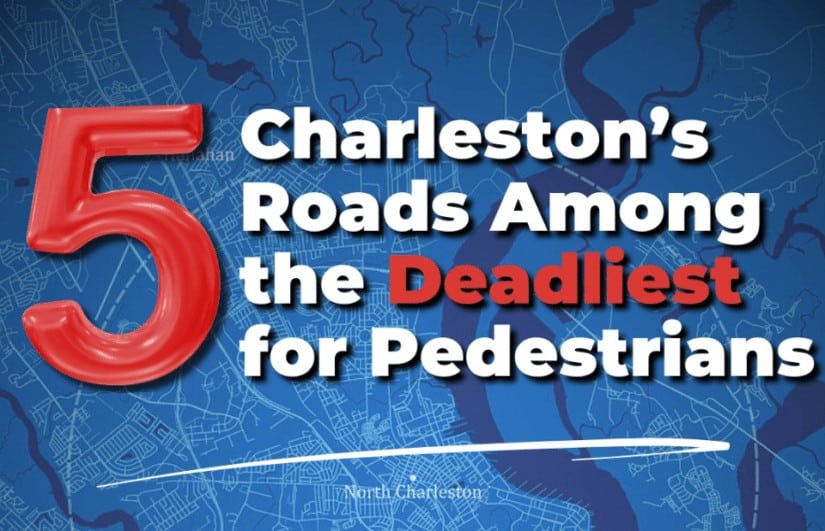
Charleston has become one of the most hazardous places for pedestrians in the United States, with many pedestrian deaths occurring on just five main roads. The tragic story of Kenneth Goodwin, a veteran using a motorized scooter to navigate busy streets, highlights these dangers. Goodwin was struck by a vehicle on Rivers Avenue—a road notorious for pedestrian incidents leaving him injured and fearful of another collision. His situation, along with numerous other accidents, underscores the urgent need for safer roadways for non-motorized users.
The Most Dangerous Roads in Charleston
The Post and Courier identified that a significant number of pedestrian deaths happen repeatedly on the same five roads in Charleston County, all owned by the South Carolina Department of Transportation (SCDOT):
These thoroughfares, designed primarily for vehicle speed, are often without essential pedestrian infrastructure, like continuous sidewalks or frequent crosswalks, making them perilous for walkers and cyclists.
Charleston’s Alarming Pedestrian Safety Statistics
Charleston has gained national attention for its high pedestrian fatality rate. The city ranks among the most dangerous areas for pedestrians in the United States. Between 2018 and 2022, nearly 1,000 pedestrians and cyclists died across South Carolina. Charleston County alone reported around 1,800 injuries and more than 150 deaths.
Low-income communities face higher risks. Many residents depend on walking or public transit. As a result, they encounter unsafe roads more often.
Factors Contributing to Pedestrian Risks
Several issues increase pedestrian danger in Charleston. Poor road design and limited infrastructure remain major concerns. SCDOT manages over 41,500 miles of roads, yet funding for safety projects remains tight. Because of this, many roads still lack sidewalks and crosswalks.
Long stretches without safe crossing points push pedestrians to take risks. In many areas, unsafe crossing becomes unavoidable.
Funding shortages also slow progress. Charleston’s transportation budget has not kept up with population growth. Even when new funding appears, it rarely covers all required upgrades.
In addition, road safety improvements often happen only after fatal accidents. For example, a crash on Morrison Drive led to new traffic signals and crosswalks. However, other dangerous roads, such as Ashley Phosphate Road, still lack proper upgrades.
Efforts to Improve Pedestrian Safety
Officials have taken steps to improve safety, but progress remains slow. In 2021, SCDOT introduced a complete streets policy. This policy considers pedestrians and cyclists in road design. However, limited funding has reduced its impact.
Safety audits have also identified high-risk roads. Some projects now target dangerous intersections. For example, Highway 17’s Crosstown section will receive upgrades, including medians, signals, and lighting. Construction should begin soon.
Federal support plays a key role in major projects. A new electric bus system will expand across Charleston by 2029. This project will also improve sidewalks and crosswalks along key routes. However, these long-term plans do not solve immediate risks.
The Human Cost of Unsafe Roads
Unsafe roads continue to impact lives across Charleston. The Crosstown Parkway highlights this issue clearly. A tragic accident in 2014 led to safety reviews, yet meaningful changes took years.
Families who lose loved ones often see improvements come too late. For them, delayed action adds to the pain of loss.
Charleston’s Growing Challenges
Charleston’s population continues to grow rapidly. New residents and tourists add pressure to already busy roads. This increase raises the risk of accidents for pedestrians.
City leaders stress the importance of walkable infrastructure. Without it, traffic congestion and safety risks will worsen.
Infrastructure Gaps Across the Region
Many suburban areas lack basic pedestrian facilities. Some major bridges remain unsafe or inaccessible for walkers.
For example, plans for a pedestrian bridge at Limehouse Bridge were canceled due to funding issues. Meanwhile, the North Bridge has seen multiple fatalities. Despite years of studies, improvements remain limited.
Closing these gaps requires strong coordination between local, state, and federal agencies. However, budget limits continue to delay progress.
A Call for Action
Charleston’s road safety challenges demand urgent attention. Small changes like crosswalks and signals help, but they are not enough. The city needs a broader redesign that prioritizes pedestrians alongside vehicles.
Advocates continue to push for better infrastructure and stronger policies. Each improvement can save lives and prevent future tragedies.
Until meaningful changes happen, Charleston’s roads will remain dangerous for many residents.
What the Ted Law Firm Can Do For You
If you or a loved one has been injured in a pedestrian accident, please call Ted instead and give the Ted Law Firm a call at 888-333-5555 and our experienced pedestrian accident lawyers are ready to assist you in these hard times.