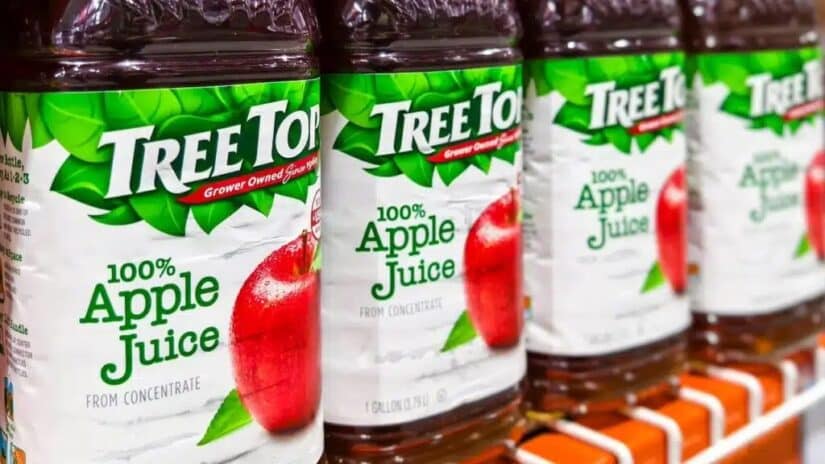
When you pick up a bottle labeled “100% Apple Juice,” you expect nothing more , and nothing less , than juice extracted purely from apples. But now, a federal class action lawsuit has cast serious doubt on that promise.
Tree Top Inc. is under fire in California federal court, accused of misrepresenting its apple juices by labeling them “100% Apple Juice” while they allegedly contain synthetic ascorbic acid. The lawsuit brings up broader concerns that echo recent controversies in the dietary supplements industry , especially around transparency and labeling accuracy.
The plaintiff, Nora Borowsky, filed the suit on July 1, 2025, in the U.S. District Court for the Northern District of California. She claims she was misled by the product’s label, which convinced her the juice contained no synthetic additives , a concern commonly raised among buyers of dietary supplements and natural health products.
With similar issues already triggering federal scrutiny from regulators like the Federal Trade Commission and Food and Drug Administration, this case could set a legal precedent , especially in high-awareness regions like Washington, DC.
Synthetic Ingredients in “Natural” Products
Borowsky’s complaint focuses on ascorbic acid. This ingredient is a synthetic form of vitamin C. Companies use it to preserve and stabilize food. However, it does not come from apples.
Many brands use similar ingredients in dietary supplements. They often hide them behind complex names. As a result, labels can confuse buyers.
Tree Top’s “100% Apple Juice” claim raises similar concerns. Some buyers expect only natural ingredients. Therefore, synthetic additives may mislead them.
This issue appears often in the supplement market. Companies sometimes overstate health benefits. They also use unclear labels. As a result, lawsuits and investigations continue to rise.
Why Consumers Are Paying Attention
Consumers in Washington, DC, closely watch these issues. Many people there focus on health and product quality. Therefore, they question unclear labels.
Advocacy groups are also pushing for stricter rules. They want better control over supplements and beverages. As a result, regulators face growing pressure.
Cases like this raise concerns across the country. They highlight gaps in labeling standards. Therefore, national agencies are paying attention.
Tree Top’s Labeling Under Review
The lawsuit targets Tree Top Inc. for its product claims. The label states “100% Apple Juice” and “100% USA Apples.” However, the product includes synthetic ascorbic acid.
The complaint argues that these claims mislead buyers. As a result, consumers may pay more for a product they misunderstand.
Food labels now face greater scrutiny. This trend mirrors the supplement industry. If the court finds Tree Top liable, the company may change its labels. It may also pay compensation and issue corrections.
Labeling Laws and Industry Impact
This case raises a key question. How far can companies go with product claims?
The lawsuit cites several laws, including:
- Consumers Legal Remedies Act
- False Advertising Law
- Unfair Competition Law
Regulators like the Federal Trade Commission and FDA may also get involved. Therefore, the case could set broader standards. It may affect both food and supplement industries.
Similar Cases Across Industries
This lawsuit reflects a larger trend. Many industries now face legal action over misleading claims.
For example:
- The Bountiful Company faced claims over supplement labeling
- Publishers Clearing House faced issues with promotions
- Crypto firms faced lawsuits over false promises
- Medical alert brands faced scrutiny over product claims
These cases show a clear pattern. Consumers now demand honest marketing. As a result, companies face stronger accountability.
Why “100% Apple Juice” Is Risky
Terms like “100%” or “natural” carry strong meaning. However, they can mislead buyers if products include synthetic ingredients.
Many consumers pay higher prices for these claims. They expect pure and natural products. Therefore, unclear labeling creates legal risk.
This issue mirrors problems in the supplement market. Companies must clearly disclose all ingredients.
Could You Be Affected?
You may qualify for compensation if you bought this product. This applies if you believed it had no synthetic ingredients.
Many health-conscious buyers avoid such additives. Therefore, misleading labels may impact their choices.
Growing Demand for Consumer Protection
Consumers are pushing back against unclear labeling. This trend continues across food and supplement markets.
People now demand simple and honest labels. As a result, companies must improve transparency.
These lawsuits help enforce accountability. They also remind brands to stay honest.
What Happens Next?
The U.S. District Court will review the case. It will decide if the class action can move forward.
If approved, the case may impact many consumers. Tree Top may need to:
- Update its labels
- Pay compensation
- Clarify product details
- Follow stricter oversight rules
As a result, this case may shape future labeling standards.
Why Legal Support Matters
At Ted Law Firm, we stand with those who’ve been misled , from food claims to false guarantees in dietary supplements and beyond. Have you purchased Tree Top “100% Apple Juice” only to discover it contains synthetic ascorbic acid? and mislabeled dietary supplements. We serve families across Aiken, Anderson, Charleston, Columbia, Greenville, Myrtle Beach, North Augusta and Orangeburg Get a free consultation with no upfront fees , we only get paid when you do. Let us fight for your right to truth in labeling. Contact Ted Law today