
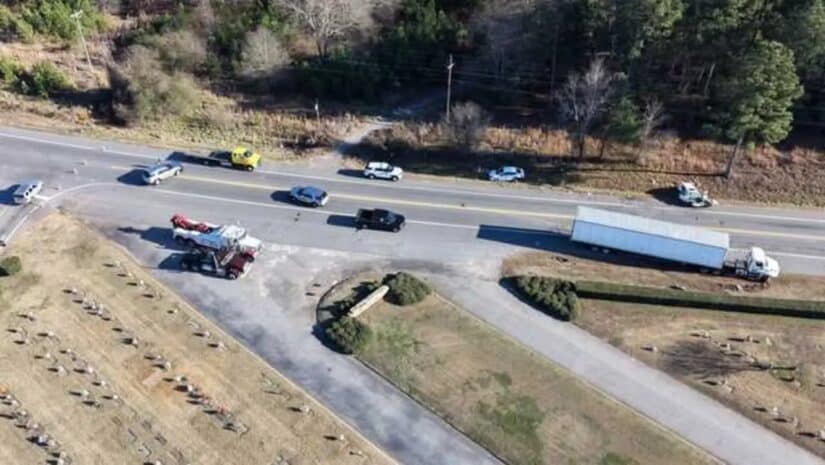
A routine drive home turned tragic Tuesday afternoon in Anderson County, where a 73-year-old man lost his life following a serious traffic collision. According to the coroner, the man was returning home from a relative’s funeral when the crash occurred, adding a deeply personal and heartbreaking layer to an already devastating event, a type of loss car accident lawyers often see when families seek answers after sudden roadway fatalities.
The incident serves as a solemn reminder of how quickly life can change on the road, even during moments meant for reflection and mourning.
What Happened on U.S. Highway 29
The crash occurred around 1:38 p.m. on U.S. Highway 29 near Forest Lawn Memorial Park. Authorities reported that the victim, identified as Dwayne Stegall, was traveling northbound when his vehicle struck a stationary car from behind near Cox Road.
Following the initial impact, Stegall’s vehicle entered the path of a tractor-trailer traveling along the highway. The secondary collision significantly increased the severity of the crash and caused extensive damage.
Emergency responders were dispatched to the scene shortly after the collision was reported.
Emergency Response and Medical Efforts
Due to the seriousness of his injuries, Stegall was airlifted to a hospital in the Greenville area for emergency medical care. Despite these efforts, he died a short time later.
The Anderson County Coroner’s Office confirmed his death and later shared that Stegall had been returning home from a family funeral at the time of the crash. This detail has resonated deeply with the community, underscoring the emotional weight of the loss.
How Rear-End Collisions Can Become Fatal
Rear-end collisions are often perceived as minor traffic incidents, but this case demonstrates how dangerous they can be under certain conditions. When a moving vehicle strikes a stationary car, the sudden deceleration can cause loss of control, especially at highway speeds.
In this incident, the rear-end impact did not end the danger. Instead, it redirected Stegall’s vehicle into the path of a much larger commercial truck. Collisions involving tractor-trailers frequently result in severe injuries due to the size and weight difference between vehicles.
The Risk of Secondary Impacts
Secondary impacts are among the most dangerous outcomes in traffic crashes. Even when the first collision is survivable, the second impact often delivers far greater force.
When a vehicle is pushed into another lane or opposing traffic, drivers have little to no time to react. This lack of reaction time can turn a manageable crash into a fatal one within seconds.
Investigators typically examine whether roadway design, traffic flow, or visibility issues contributed to such chain-reaction events.
Investigating the Cause of the Crash
Following a fatal collision, authorities work to reconstruct the events leading up to the crash. This process may involve analyzing vehicle damage, skid marks, traffic camera footage, and witness statements.
Key questions often include:
- Why was the initial vehicle stationary on the roadway
- Whether visibility or traffic congestion played a role
- How speed and following distance affected the outcome
- Whether roadway conditions contributed to the collision
These findings help determine responsibility and provide clarity for the victim’s family.
The Emotional Impact on Families
Learning that a loved one was killed while returning from a funeral compounds the grief families already carry. What should have been a quiet journey home instead became another loss for those left behind.
Fatal crashes not only affect victims. Families, friends, and entire communities feel the ripple effects long after the roadway is cleared. Emotional trauma, unanswered questions, and sudden changes to daily life often follow.
Why Highway Safety Remains Critical
U.S. Highway 29 is a heavily traveled roadway, used daily by commuters, commercial drivers, and families alike. Crashes on major highways tend to be more severe due to higher speeds and heavier traffic volumes.
This incident reinforces the importance of maintaining safe following distances and remaining alert at all times, especially when traffic patterns change unexpectedly.
Accountability After a Fatal Crash
When a crash results in loss of life, accountability matters. Understanding what happened is not only about determining fault, but also about preventing similar tragedies in the future.
Clear investigations help families find answers and ensure that safety lessons are not ignored. They also play a role in shaping safer driving behavior across communities.
A Reminder About Life on the Road
This tragedy highlights how ordinary moments can take unexpected turns. A drive home from a funeral, meant to bring closure, instead ended in loss.
Every journey carries responsibility. Staying alert, patient, and cautious can make a difference not only for ourselves, but for everyone sharing the road.
If a Loved One Was Lost in a Traffic Crash
Losing someone in a sudden crash leaves families facing emotional and practical challenges at the same time. Understanding your rights and the steps available can help bring clarity during an overwhelming period.If your family has been affected by a fatal accident, speaking with an experienced attorney can help you understand your options, protect your rights, and take informed next steps. A compassionate legal review can provide guidance while allowing your family the space to focus on healing.