
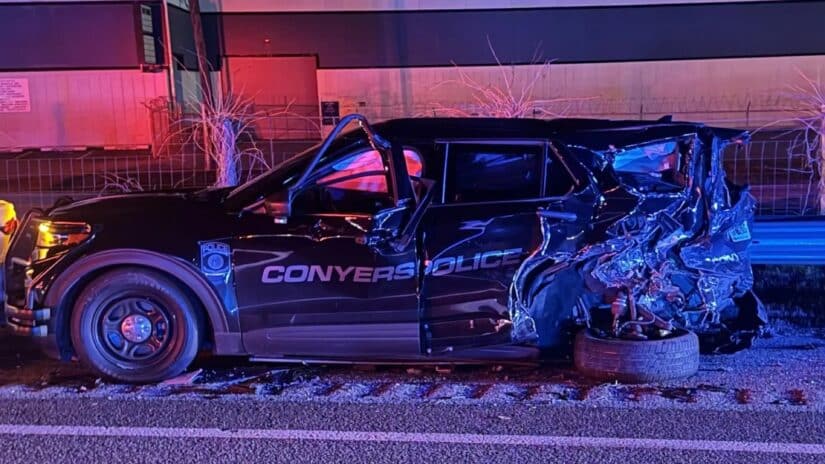
A Conyers officer was injured after a patrol car was hit on the side of Interstate 20 while assisting a stranded driver, highlighting the dangers of roadside crashes and the importance of Georgia’s Move Over Law. Incidents like this raise serious safety and legal concerns for drivers across the state, and injured victims often turn to Ted Law Firm for guidance after interstate accidents.
Patrol Vehicle Struck While Assisting Motorist
The crash occurred on I-20 as a Conyers police sergeant stopped to help a driver with a flat tire. The patrol vehicle was parked alongside the interstate with emergency lights activated. While the officer was inside the vehicle entering call notes into a computer system, another driver slammed into the patrol car.
The impact caused significant damage to the police vehicle. The officer sustained minor injuries and was transported to the hospital for evaluation. Officials confirmed the injuries were not life threatening.
The Conyers Police Department later reminded motorists about the importance of caution when approaching emergency vehicles on highways.
The Dangers of Interstate Roadside Stops
Interstate highways present unique risks. Vehicles travel at high speeds. Traffic is dense. Drivers may be distracted. Even with flashing lights visible, roadside stops remain dangerous.
When officers assist stranded motorists, they often position patrol cars to create a protective barrier. Emergency lights are activated to alert approaching drivers. Despite these precautions, collisions still occur.
Common factors in roadside crashes include:
- Distracted driving
- Speeding
- Failure to merge
- Driver fatigue
- Poor visibility
Even a momentary lapse in attention can lead to a serious crash at highway speeds.
Understanding Georgia’s Move Over Law
Georgia law requires drivers to move over one lane when approaching stopped emergency vehicles with flashing lights. This includes police cars, ambulances, fire trucks, tow trucks, and certain utility vehicles.
If changing lanes is not possible due to traffic conditions, drivers must slow down well below the posted speed limit and be prepared to stop.
The purpose of this law is simple. It protects first responders, roadside workers, and stranded motorists. Violations can result in fines and penalties. More importantly, failure to comply can cause preventable injuries or fatalities.
The Conyers Police Department emphasized that following these rules saves lives.
Legal Consequences of Failing to Move Over
When a driver strikes a parked patrol vehicle, legal liability often becomes clear. The at fault driver may face:
- Traffic citations
- Increased insurance premiums
- Civil liability for injuries and damages
- Potential criminal charges in severe cases
In civil claims, injured officers or other victims may seek compensation for medical expenses, lost income, and other damages.
Evidence in these cases may include dash camera footage, body camera recordings, crash reconstruction analysis, and eyewitness testimony.
Injuries Common in Highway Impact Collisions
Even when injuries are described as minor, interstate crashes can cause serious physical strain. High speed impacts may result in:
- Whiplash
- Concussions
- Back injuries
- Shoulder injuries
- Soft tissue damage
Symptoms sometimes appear hours or days after the incident. Medical evaluation is critical after any collision on a major highway.
Long term complications can develop if injuries are not properly treated. Documentation from emergency rooms and follow up care becomes important for any legal claim.
Risks to First Responders
Police officers and emergency personnel face daily exposure to roadside hazards. National safety data consistently shows that traffic related incidents are a leading cause of line of duty injuries.
When officers stop to assist stranded drivers, they place themselves between moving traffic and disabled vehicles. Even marked patrol cars with bright emergency lighting cannot eliminate all risk.
Public awareness campaigns stress the need for drivers to remain alert and cautious when approaching flashing lights.
Liability in Interstate Crash Cases
Determining fault in a roadside crash typically involves reviewing several factors:
- Speed of the striking vehicle
- Road conditions
- Visibility
- Traffic flow
- Positioning of emergency vehicles
Police reports document the scene. Photographs and vehicle damage patterns help reconstruct the event. Electronic data from vehicles may reveal braking patterns and speed at impact.
Insurance companies investigate quickly. Statements from involved parties are recorded. Early legal guidance can help protect injured individuals from unfavorable claim decisions.
Compensation After a Roadside Collision
Victims of interstate crashes may be entitled to financial recovery. Compensation can include:
- Medical costs
- Future treatment expenses
- Lost wages
- Reduced earning ability
- Pain and suffering
Each case depends on the facts. Insurance carriers often attempt to limit payouts. Proper documentation and evidence strengthen claims.
Even when injuries are considered minor, medical bills and missed work can create financial stress.
Preventing Future Roadside Accidents
Drivers play a direct role in preventing similar incidents. Safe practices include:
- Reducing speed when approaching flashing lights
- Avoiding phone use while driving
- Maintaining safe following distances
- Staying alert in construction and emergency zones
Public compliance with Move Over laws reduces secondary collisions and protects those working on the roadside.
Education and enforcement remain key tools in reducing highway injuries.
Broader Public Safety Implications
Highway crashes involving emergency vehicles affect entire communities. Damaged patrol vehicles require repair or replacement. Officers may be temporarily unable to return to duty. Emergency resources become strained.
When drivers fail to slow down or change lanes, they increase risks for everyone. Interstate collisions can also create traffic congestion and secondary accidents.
Law enforcement agencies continue to remind motorists that small driving adjustments can prevent life altering outcomes.
About Ted Law Firm
At Ted Law Firm, represents individuals injured in serious motor vehicle accidents, including interstate collisions and roadside crash cases. We serve families across Aiken, Anderson, Charleston, Columbia, Greenville, Myrtle Beach, North Augusta and Orangeburg. The firm handles claims involving distracted driving, failure to move over violations, and high speed impact injuries. Clients receive clear communication and consistent case updates. Ted Law Firm pursues full compensation for medical expenses, lost income, and long term damages resulting from highway crashes. Contact us today for a free consultation.