
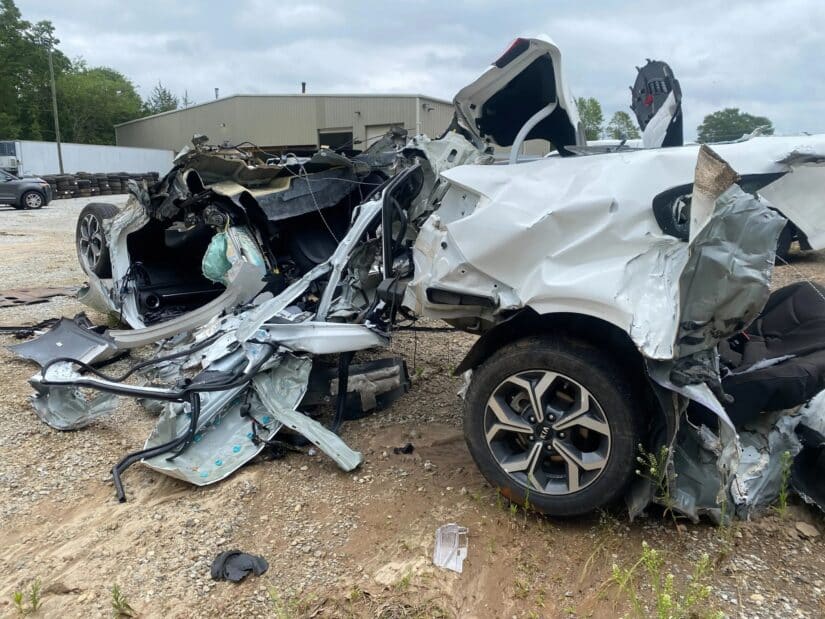
South Carolina continues to face rising concerns related to road safety, car accidents, and fatal crashes, particularly across rural roads, county roads, and intersections that connect dense residential areas with high-traffic corridors. A recent fatal collision in Greenville County has once again highlighted how quickly a single-vehicle crash can escalate into a life-changing tragedy. Although the Palmetto State is no stranger to motor vehicle accidents, each new incident underscores the ongoing challenges of traffic safety, environmental conditions, road design, and public awareness campaigns aimed at reducing fatal injuries.
According to South Carolina Highway Patrol and the South Carolina Department of Public Safety, a 2020 Kia Soul was traveling south on Elizabeth Drive near Yorkshire Drive just after 9 a.m. when it veered off the roadway. The vehicle struck a stop sign, continued into a retaining wall, and then collided with several trees positioned within the right-of-way. Emergency medical teams transported the driver, 25-year-old Ja’marcus Teshawn Smalls of Spartanburg, to Greenville Memorial Hospital, where they later passed away from injuries sustained in the crash. This fatal motor vehicle crash remains under investigation.
Although this was a single-vehicle incident, it fits into a much larger pattern reflected in statewide traffic crash data, Uniform Traffic Collisions Report forms (TR-310), and the growing body of car crash data maintained through the Crash Data Analysis Network and similar traffic crash data systems. Examining the details of this tragic event, alongside broader transportation trends, offers valuable insight into the risks drivers face across the Southern United States concerns frequently reviewed by experienced car accident lawyers who help families navigate the aftermath of fatal collisions.
The Crash in Context: What Authorities Have Confirmed
Greenville County, often cited as one of the most active regions for traffic accidents and fatal accidents in the Palmetto State, reports a high number of auto accident cases every year. Statewide data from the South Carolina Department of Public Safety links many fatal collisions to roadway departures, nighttime driving conditions, speeding-related fatalities, impaired driving, and distracted driving.
The details confirmed so far include:
- The vehicle left the roadway for reasons still being investigated.
- It struck multiple fixed objects, including a stop sign and retaining wall.
- The final impact involved several trees, a common hazard on rural roads and suburban edges.
- The driver was the only occupant and suffered fatal injuries.
This constitutes both a fatal crash and a fatal collision in official reporting terms.
Crash reconstruction teams from South Carolina Highway Patrol will analyze skid marks, roadway geometry, vehicle safety systems, seat belt use, environmental conditions, and traffic control measures present at the scene. Investigators may retrieve Event Data Recorder information to review speed, braking, steering, and acceleration inputs before the collision.
South Carolina’s Ongoing Challenges with Road Safety
South Carolina is consistently ranked among states with the highest rates of car accidents, fatal crashes, and fatal motor vehicle crashes in the nation. The Insurance Institute for Highway Safety and National Highway Traffic Safety Administration frequently cite concerns such as:
- high traffic volumes in urban areas like Greenville,
- rapid growth and infrastructure development,
- outdated or overloaded junctions,
- intersection crashes involving red light violations,
- dangerous county roads with limited shoulders,
- speeding-related fatalities on rural roads,
- vehicle miles traveled increasing each year.
Locations such as White Horse Road, Woodruff Road, Pleasantburg Drive, Laurens Road, North Pleasantburg Drive, Wade Hampton Boulevard, Main Street, and Asheville Highway regularly appear in collision experience studies due to dense traffic patterns and challenging roadway design.
Traffic Safety and Contributing Factors in Fatal Crashes
1. Distracted Driving and Driving Distracted
Distracted Driving Crashes continue to rise across American roads. These involve drivers interacting with phones, navigation devices, or other distractions that reduce reaction time. The Department of Public Safety repeatedly reminds drivers of hands-free driving law expectations.
2. Impaired Driving and Alcohol-Related Crashes
Driving under the influence remains a significant contributor to traffic accidents and fatal injuries in South Carolina. Blood Alcohol Concentration limits are enforced, yet impaired driving remains a recurring cause of fatal collisions.
3. Road Hazards and Environmental Conditions
Environmental conditions such as wet pavement, glare, or roadway debris can influence traffic collisions, especially on county roads and rural roads where wildlife crossings or low-visibility curves are common.
4. Speeding and Nighttime Driving Risks
Speeding-related fatalities increase during nighttime driving when visibility decreases and reaction times change.
5. Intersections and Red Light Behaviors
Intersection crashes involving red lights, T-bone crashes, and abrupt lane reductions are among the most dangerous auto accident scenarios.
Car Accident Statistics in the Palmetto State
South Carolina Department of Transportation data reveals that:
- traffic crash volumes continue to rise,
- vehicle miles traveled increase yearly,
- traffic accident data shows higher risk on rural roads than urban areas,
- seat belt use remains a critical safety factor,
- seat belts significantly reduce the severity of fatal injuries,
- safety measures such as defensive driving, public awareness campaigns, and improved vehicle maintenance help reduce crashes.
Insurance companies evaluate these statistics when handling liability claims, especially when determining coverage for Personal Injury Protection and other policy components.
Major Roadway Networks and South Carolina’s Safety Records
South Carolina’s transportation network connects with major corridors across the Southern United States. While areas like the Low Country, Union counties, and rural Upstate communities face unique challenges, the entire region is tied together through regional and national highway systems such as:
- U.S. 29,
- Interstate 78,
- U.S. 22,
- major routes connecting to the PA Turnpike,
- the High Injury Network and High Injury Network Map used for safety mapping.
Data from the AAA study and Crash Data Analysis Network show that dangerous county roads and outdated junctions play a significant role in collision patterns.
Roadway Design, Traffic Management, and Safer Communities
South Carolina continues to invest in infrastructure development, reviewing traffic signals, accessible sidewalk ramps, pedestrian crossings, bicycle lanes, wildlife crossings, and lane reductions. Traffic management strategies are implemented to address outdated or overloaded junctions, improve road safety records, and promote safer driving conditions.
High injury corridors such as White Horse Road and Woodruff Road have seen targeted improvements due to their history of motor vehicle accidents.
A Broader Look at Safety: Public Facilities, Demolition Standards, and Regulatory Comparisons
To integrate your earlier keyword list naturally, we expand the safety discussion to include how public facility oversight parallels transportation safety.
Regulated Facilities and Public Projects
Whether it is a university campus, a military facility, an industrial facility, a shopping mall, or a private development, facility owners must comply with public safety regulations. Urban renewal purposes and renovation activity require land use permits, building inspector evaluations, and adherence to safety codes.
Demolition Activity, Renovation, and Asbestos Regulations
Federal asbestos regulations require strict protocols during any demolition activity or demolition project involving regulated asbestos containing materials or regulated asbestos containing waste material. Notification of demolition must occur days in advance. Nonfriable mastic, asbestos contaminated debris, and powder during demolition operations fall under regulated facility standards.
These facility safety procedures share similarities with roadway safety investigations, reinforcing the importance of compliance, risk assessment, and structured oversight in preventing harm.
Traffic Safety, Public Awareness, and Community Impact
South Carolina’s public awareness campaigns emphasize:
- defensive driving,
- improved seat belt use,
- road hazard awareness,
- better understanding of traffic laws,
- avoiding driving distracted,
- reporting unsafe conditions.
Local communities across Greenville County, from Pleasantburg Drive to Wade Hampton Boulevard, advocate for improved safety measures to reduce car accident deaths and strengthen South Carolina’s overall safety records.
About TED Law Firm
At Ted Law Firm, is dedicated to supporting individuals and families facing difficult and unexpected circumstances.We serve families across Aiken, Anderson, Charleston, Columbia, Greenville, Myrtle Beach, North Augusta and Orangeburg.Our team maintains a strong commitment to clarity, communication, and informed guidance. We focus on helping people understand their situation clearly and navigate the complexities that can arise after a roadway incident or other sudden event. TED Law Firm stands with those seeking direction and stability during challenging times..Contact us today for a free consultation.