
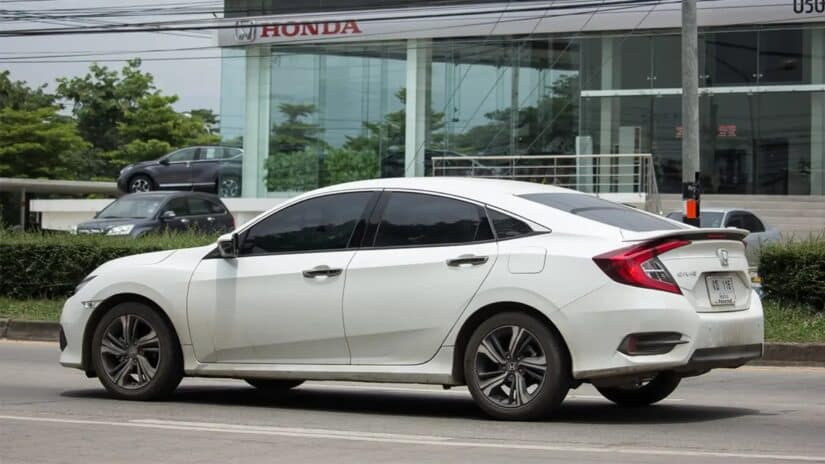
Honda Motor Co Ltd has issued a major safety recall involving more than 400,000 Honda Civics across the United States after federal regulators identified a potential wheel detachment issue linked to faulty alloy wheels. The recall notice, filed with the National Highway Traffic Safety Administration, outlines how a manufacturing defect connected to improperly installed steel lug seat inserts may cause wheel nuts to loosen during vehicle operation. Over time, this may result in full wheel separation, creating a significant crash risk for drivers and others on the road. If you or a loved one has been injured due to this defect, a personal injury lawyer can help you seek compensation for damages.
This recall affects 406,290 vehicles, specifically model years 2016–2021, and involves Civics equipped with 18-inch aluminum alloy wheels. Honda stated that the problem originated when unfinished products were mistakenly shipped and installed as finished products during final assembly. The result was wheels where the lug seat inserts were not properly pressed into the aluminum wheel surface, weakening the lug nut seating surface.
This extensive recall highlights how even a single factory production error in a wheel supplier’s factory in this case in Italy can lead to major auto recalls across an entire region.
How the Manufacturing Error Was Discovered
According to the recall documents submitted to NHTSA, Honda became aware of the problem during a routine inspection process in July 2024. Technicians in Japan discovered a Civic with missing steel inserts, prompting the automaker to begin a deeper investigation. During the inquiry, Honda traced the issue back to a sequence of seat press-fitting failures at the European supplier responsible for these aluminum alloy components.
The supplier’s plant had incorrectly categorized several unfinished products as completed wheels. These wheels were shipped without undergoing final inspection, bypassing required checks that would have flagged the missing lug seat inserts. Honda confirmed that this constituted a clear manufacturing error and a threat to safe vehicle operation.
Internal reviews also noted that the wheels involved were not accessory wheels, but original equipment components intended for use with Civic models fitted with genuine parts. In several cases, technicians noted that improperly installed inserts would eventually cause lug nuts to loosen as the vehicle experienced normal road vibrations.
Why Wheel Detachment Is a Critical Safety Issue
Once the lug seat inserts fail to hold the wheel nuts firmly in place, the risk escalates rapidly. Affected wheels may begin vibrating, causing instability, reduced brake function, and difficulty maintaining proper alignment. In severe cases, continued loosening can lead to complete wheel separation, which can instantly compromise drive power, steering control, and braking ability.
Federal regulators and automotive leaders emphasize that wheel defect recalls hold among the highest risk potential because a detached wheel can:
- Reduce the driver’s ability to steer
- Damage surrounding components
- Create debris hazards for nearby vehicles
- Cause multi-vehicle crashes
- Endanger pedestrians and other motorists
While Honda has stated that it has not received reports of injuries linked to this recall, both the NHTSA and the company acknowledge the potential for serious harm if repairs are delayed.
Honda’s Response and Repair Plan
Honda issued the recall under an official NHTSA recall number, which owners can locate on the NHTSA site using a Vehicle Identification Number. The company began notifying Honda dealerships on October 31 about required inspection and repair procedures. According to the recall notice, dealers will examine the wheels and hubs and replace necessary parts at no cost.
Key components of Honda’s action plan include:
- Free inspections for all affected Honda Civics
- Replacement of alloy wheels and hubs where necessary
- Verification that all aluminium alloy wheels are free of defect
- Distribution of owner notification letters by December 8
- Guidance through Honda’s customer service department
Owners can contact Honda at 1-888-234-2138, and Honda encourages drivers to use the recall lookup portal or perform a VIN search to verify eligibility.
Which Vehicles Are Affected
The recall applies to the following:
- 2016 Honda Civic
- 2017 Honda Civic
- 2018 Honda Civic
- 2019 Honda Civic
- 2020 Honda Civic
- 2021 Honda Civic
The recall is specific to models equipped with 18-inch aluminum alloy or aluminum accessory wheels containing defective steel lug seat inserts.
Honda clarified that no Honda Accord, Honda Accord Hybrid, or Accord Hybrids are affected by this specific wheel recall. However, Honda does face other investigations involving Honda Accord Hybrid vehicles, software programming, potential software error, integrated control modules, main computer faults, camera issue, and backup camera glitch in unrelated cases. Those concerns are separate from the Civic wheel recall.
The Wheel Supplier and the Origin of the Defect
Honda’s findings show the issue traces back to a European wheel supplier’s factory responsible for 18-inch alloy components. The supplier mistakenly sent wheels that were not fully completed, classifying them as finished products despite missing steel inserts. These faults were later identified as factory production errors involving irregularities in press-fitting and improper quality control procedures.
Honda confirmed that the wheels should have undergone more rigorous final inspection, which would have involved verifying press-fit accuracy, ensuring proper adhesion between the aluminum and insert components, and confirming no faulty parts were present.
This situation reinforces the importance of supplier oversight and the need for consistent global manufacturing standards across Honda’s international production network.
Can Drivers Detect the Problem?
Most drivers may not notice early signs of the defect because the loosening of lug nuts may progress gradually. However, some potential indicators include:
- Vibrations while driving
- Unusual noises near the wheel area
- Steering instability
- Difficulty maintaining tire balance
- Warning lights related to vehicle operation
If any of these symptoms appear, Honda urges drivers to seek immediate service at an authorized Honda dealership.
Other Honda Recalls and Context
Although unrelated to the wheel defect, Honda is simultaneously managing ongoing scrutiny in other areas, including allegations that the company denied warranty claims involving 1.5-liter and 2.0-liter turbocharged engines found in various Honda and Acura models. Some reports cite concerns about power loss, fuel pump issue, and Engine Debris in certain vehicles. These issues have sparked consumer awareness around broader safety issues, though they do not relate to the Civic wheel recall.
Honda also continues to update internal integrated control module systems, address display issue complaints, and refine internal software in several Hybrid vehicles. These concerns are subject to separate evaluations and are not linked to the current Civic alloy wheel recall.
How Owners Should Proceed
Drivers should:
- Conduct a VIN search through the NHTSA or Honda recall tool.
- Read the owner notification letters once received.
- Schedule an inspection at a Honda dealership.
- Keep documentation of repairs and communication.
- Monitor updates from federal regulators regarding additional findings.
Because auto recalls involving wheel components can worsen over time, quick action is essential.
Role of Federal Regulators
The National Highway Traffic Safety Administration plays a central role in monitoring defective vehicle components, issuing recall guidance, investigating public complaints, and ensuring automakers comply with safety standards. Their involvement in this case underscores the severity of the potential crash risk.
Federal regulators use engineering analysis, field reports, consumer complaints, and supplier audits to determine whether a defect qualifies as a recall event. In this instance, NHTSA concluded the manufacturing defect linked to steel lug seat inserts posed a measurable threat to safe vehicle operation.
About Ted Law
At Ted Law Firm, stands with individuals who want clarity and reliable support when facing complex issues involving vehicle defects, safety recalls, and consumer rights.We serve families across Aiken, Anderson, Charleston, Columbia, Greenville, Myrtle Beach, North Augusta and Orangeburg. If you or someone you know has concerns regarding a faulty part, manufacturing error, or recall-related loss, you can reach out for guidance that helps you navigate the next steps.Contact us today for a free consultation.