
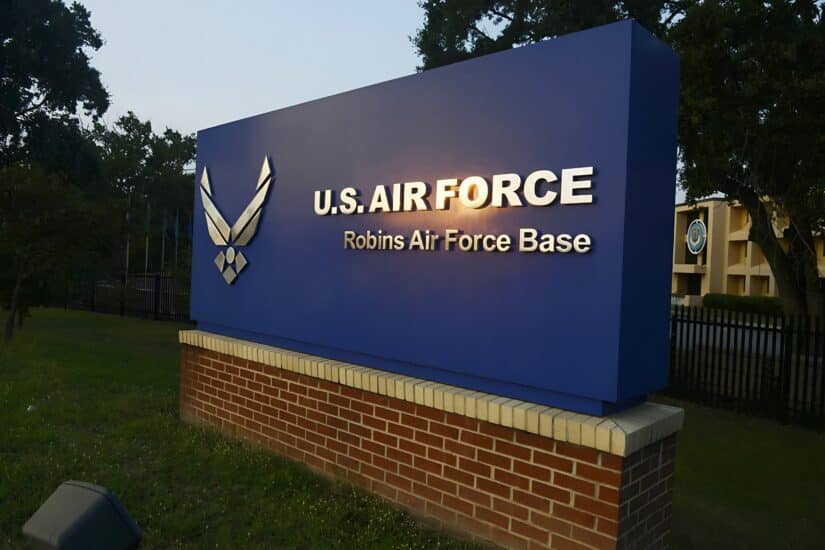
Traffic near military bases is often intense, with service members, contractors, visitors, and civilians all sharing the same roads. Robins Air Force Base in Georgia is no exception. The gates that serve as entry and exit points are high-traffic areas where accidents can and do occur. These incidents raise unique legal questions: Who has jurisdiction? Which courts oversee the claim? And how do federal courts, District Court processes, or even the Supreme Court’s original jurisdiction come into play? For anyone involved in a Warner Robins Car Accident, these distinctions matter greatly. This blog explores these differences, highlighting the legal framework and jurisdictional complexities that govern on-base versus off-base accidents.
Why Gates Become Accident Hotspots
Military bases like Robins AFB operate much like small cities. Thousands of vehicles pass through the gates daily, especially during shift changes. These choke points can create conditions for accidents, leading to injuries, property damage, and legal issues that may extend into civil actions or federal jurisdiction.
Unlike standard intersections, base gates involve ID checks, armed security, and regulatory compliance rules that affect traffic flow. When accidents occur in such a tightly controlled space, questions of concurrent jurisdiction and limited jurisdiction often surface, complicating the claims process.
On-Base vs. Off-Base Accidents
On-Base Accidents
Accidents inside Robins AFB usually fall under federal jurisdiction. Military police and security forces handle investigations, and claims may involve federal agencies such as the Department of Defense or, in some cases, the Federal Trade Commission if consumer rights intersect with regulatory frameworks.
Legal issues here often include:
- Can a civilian bring civil actions against the government?
- Does the FTCA provide exclusive jurisdiction to federal district courts?
- When does concurrent jurisdiction between federal courts and state courts apply?
The legal background of these cases highlights how personal jurisdiction, federal question jurisdiction, and even diversity jurisdiction may determine outcomes.
Off-Base Accidents
Off-base crashes, just outside the gates, fall under Georgia’s state jurisdiction and municipal courts. These accidents typically involve personal property claims, state insurance disputes, and civil jurisdiction rules. Here, victims file claims through insurers or state courts, avoiding the strict procedural hurdles of federal courts.
Still, when military members are involved, legal compliance, risk management, and even appellate jurisdiction issues may arise if a case moves up to higher courts.
Jurisdictional Complexities
One of the most confusing aspects of Robins AFB accidents is the overlap between federal courts, state jurisdiction, and civil jurisdiction.
- Military Member vs. Civilian on Base
- Civilian victims may face exclusive jurisdiction in federal district courts, depending on the legal issues raised.
- Civilian victims may face exclusive jurisdiction in federal district courts, depending on the legal issues raised.
- Civilian vs. Civilian on Base
- Even when both parties are civilians, accidents inside the gate may trigger federal question jurisdiction.
- Even when both parties are civilians, accidents inside the gate may trigger federal question jurisdiction.
- Military Member Off-Base
- Off-base accidents usually follow state jurisdiction, but civil actions may involve diversity jurisdiction if parties live in different states.
- Off-base accidents usually follow state jurisdiction, but civil actions may involve diversity jurisdiction if parties live in different states.
Such distinctions reflect the broader legal framework of concurrent jurisdiction, appellate jurisdiction, and original jurisdiction that defines how courts handle claims.
The Federal Tort Claims Act and Civil Actions
The Federal Tort Claims Act (FTCA) governs many on-base claims. Victims must file through the appropriate federal agency before moving to federal district courts. This process underscores the role of federal courts in resolving legal issues tied to government liability.
Cases sometimes raise broader regulatory frameworks, with questions of regulatory compliance, legal compliance, and civil jurisdiction being debated at different levels of federal courts. In rare cases, appeals may even move toward the Supreme Court if constitutional or federal question jurisdiction is at stake.
Insurance and Risk Management Challenges
Accidents on federal property highlight not only jurisdiction but also risk management and compliance-related risks. Insurers may delay payouts until military reports are complete. Legal risks increase when questions of regulatory compliance or federal jurisdiction overlap with state-level claims.
Off-base claims, by contrast, typically involve state jurisdiction, municipal courts, and civil actions that deal with everyday business decisions like property damage, lost wages, and medical expenses.
Broader Legal and Business Implications
Gate accidents are not only personal legal issues but also touch upon broader compliance issues for government agencies and business operations near military bases. Business leaders and business owners in surrounding communities must account for regulatory compliance, ethical business practices, and risk management when operating near high-traffic military zones.
These incidents also highlight the corporate role of agencies in ensuring coordinated action for public safety, as well as the importance of effective risk assessment for reducing common risks.
Off-Base Claims and Civil Jurisdiction
When an accident occurs off base, Georgia’s municipal courts or civil jurisdiction courts preside. Civil actions may include claims for personal property, medical bills, and compensation for injuries.
Here, state jurisdiction governs, but civil actions can move to federal courts under diversity jurisdiction or federal question jurisdiction. Limited jurisdiction courts may also play a role in smaller claims, underscoring the layered legal framework of accident litigation.
Special Jurisdiction Considerations
Some accidents near Robins AFB may raise unusual legal issues:
- Tribal jurisdiction if Native American service members are involved in unique circumstances.
- Special maritime and territorial jurisdiction if vehicles are linked to government transport routes.
- Universal jurisdiction and extraterritorial jurisdiction rarely apply but illustrate the breadth of federal courts’ authority.
These highlight how jurisdictional rules, from municipal courts to appellate jurisdiction, shape legal outcomes.
Emerging Legal Risks: Artificial Intelligence and Generative AI
Modern traffic systems increasingly use Artificial Intelligence and generative AI for surveillance, gate monitoring, and traffic management. These technologies raise new legal issues about intellectual property rights, intellectual property protection, and licensing agency oversight.
As AI shapes regulatory frameworks, questions about compliance-related risks, cybersecurity compliance, and corporate culture compliance become part of the broader legal framework governing Robins AFB and similar bases.
Safety Tips for Drivers
- Allow extra time during peak hours.
- Follow base security and regulatory compliance rules.
- Avoid distractions.
- Maintain safe following distances.
- Respect coordinated action by security staff to avoid unnecessary legal issues.
Conclusion
Robins Air Force Base gate accidents highlight not just traffic safety but also layered legal issues involving federal jurisdiction, state jurisdiction, and regulatory frameworks. From civil actions in municipal courts to exclusive jurisdiction in federal courts, the legal framework is complex. Business operations, risk management, and compliance issues also intersect with these cases, showing how everyday business decisions and ethical business practices connect with legal risks.
About Ted Law Firm
At Ted Law Firm, is committed to providing clear, professional guidance for individuals navigating complex legal frameworks. We serve families across Aiken, Anderson, Charleston, Columbia, Greenville, Myrtle Beach, North Augusta and Orangeburg.. Ted Law Firm has built a reputation for helping clients face legal issues across different jurisdictions with confidence.Contact us today for a free consultation