
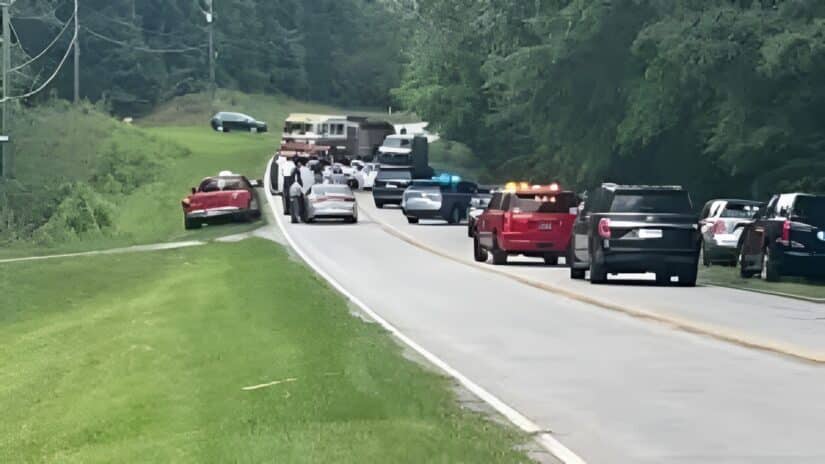
Tragic news out of South Carolina has left a community mourning after a man was airlifted to Prisma Health Richland hospital in Columbia, where he later died from his injuries. The incident, still under investigation by the South Carolina Highway Patrol, underscores the critical role of emergency response and the questions that often arise following sudden and devastating loss.
The Incident: What We Know So Far
According to statements from Lance Cpl. officials with the Department of Public Safety, the unidentified man was severely injured in an event that required emergency helicopter transport to Prisma Hospital. Despite medical intervention at Prisma Health Richland, the man succumbed to his injuries.
Though full details are still pending, the involvement of the Highway Patrol, Fire Department, and emergency medical teams suggests a high-impact situation, possibly linked to a traffic accident, collision, or another critical emergency.
Why Emergency Airlifts Are Deployed
Emergency teams use airlifts when time becomes critical. This need increases in rural areas like Orangeburg County and Calhoun County. Trauma centers such as the Medical University of South Carolina are not always nearby. In this case, doctors required immediate care at Prisma Health Richland. It remains one of the most advanced facilities in the region. Helicopter transport by the South Carolina Highway Patrol and EMS teams shows the severity of the injuries.
Coroner Involvement and Investigation
Coroner reports in Richland County help determine the cause of death. Medical examiners collect blood samples and run toxicology tests. These steps provide critical details for law enforcement and families. Officials may also examine vehicles like a pickup truck, Ford sedan, or GMC Acadia. Offices such as the York County Coroner’s Office often assist in these cases. Coroner Sabrina Gast and other officials may work with the National Transportation Safety Board and the Department of Public Safety when fatalities occur.
Potential Causes of Fatal Injury
Investigators have not confirmed the exact cause. However, several common factors lead to fatal incidents in South Carolina. These include traffic accidents on Charleston Highway, Monticello Road, or Pinewood Road. Failure to wear a seat belt also increases risk. Collisions with vehicles like a Ford F-150, Toyota SUV, or Dodge Challenger often cause severe damage. High-speed chases involving the North Charleston Police Department can also lead to fatalities. In addition, rollovers near Interstate 26 or U.S. 78 remain dangerous. Unsafe construction zones in Bamberg County or Wilson County add further risk. Some cases also involve illegal firearm possession. In each scenario, legal consequences may follow.
Negligence and Wrongful Death Concerns
South Carolina law allows families to act when negligence causes death. For example, a pickup truck collision or a construction zone crash may lead to liability. Drivers who act recklessly increase this risk. This includes driving under the influence or using a cellphone. Ignoring road safety near Ghents Branch Road or Coby Road can also lead to liability. Many of these deaths result from preventable actions. These include speeding, failing to wear a seat belt, or carrying an illegal firearm.
Investigative Questions That Matter
After an incident, investigators ask key questions. Officials from the Orangeburg Department of Public Safety, including Capt. and Lena Butler, lead these efforts. They check whether the vehicle was properly maintained. They also verify if the driver held a valid license and remained sober. In addition, they review compliance with safety laws on Charleston Highway, Monticello Road, and S.C. 120/Pinewood Road. Finally, they determine whether felony charges apply. These questions help establish accountability and prevent future incidents.
Impact on Families and the Legal Process
Families face emotional and financial challenges after sudden loss. Emergency responses often involve the Fire Department, Highway Patrol, and Master Trooper Brandon Bolt. Families must handle funeral costs and medical bills. They also deal with legal uncertainty around felony charges. Many ask where the incident occurred, such as Shem Creek or Flying J Travel Center. These questions increase stress. In many cases, children left behind suffer long-term emotional impact.
Community Response and Media Role
Media coverage in places like North Charleston raises awareness. Reports highlight both the loss and the need for better safety measures. Platforms such as Lowcountry Live and organizations like the National Hurricane Center have covered similar events. Public awareness often leads to safer road design and stronger enforcement. Authorities also focus more on seat belt use and high-risk roads like Joe S. Jeffords Road and Ridge Road.
What This Incident Teaches Us
This incident highlights several key lessons. Drivers must wear seat belts at all times. They should avoid distractions, such as checking an Apple feature while driving. Safe driving in construction zones remains critical. Authorities must enforce regulations consistently. Agencies like the South Carolina Highway Patrol play a key role in prevention. Even small details matter, including the type of vehicle involved or the exact location of the incident.
Support and Legal Pathways for Families
Families can explore several legal options after such incidents. They may seek compensation for hospital bills from facilities like Prisma Health Richland. They can also file wrongful death claims against negligent drivers or property owners. In some cases, courts may award punitive damages for reckless actions. A detailed accident investigation and collision investigation can help provide closure. However, strict time limits apply. Therefore, families should act quickly and seek professional guidance.