
Car accidents occur every day, but some of the realities behind them are far stranger, more surprising, and more alarming than most drivers ever imagine. While many people think collisions always involve speeding, reckless driving, or severe weather, the truth is far more complex. Across the country, researchers have uncovered unusual patterns, shocking statistics, and unexpected causes that make car accidents one of the most unpredictable dangers on the road, insights often highlighted by experienced car accident lawyers who study national crash trends to better understand how collisions truly happen.
The blog explores 10 crazy car accident facts that reveal how unpredictable driving can be and why staying alert matters more than ever. These facts are drawn from national crash data, transportation trends, and real-world studies that show just how unusual and widespread certain accident risks can be.
South Carolina’s Population Growth and the Pressure on Roads
The briefing highlighted one unavoidable factor. South Carolina’s population is projected to grow significantly over the next two decades. Forecasts show the state increasing by more than one million people, reaching an estimated 6.6 million residents.
More people means more vehicles. And the data shows vehicle use is rising even faster than population growth. This increased demand creates more wear on roads and greater need for regular maintenance, wider highways and updated infrastructure.
However, while travel demands are escalating, the revenue systems that fund transportation are not keeping pace.
Why the Revenue System Is Falling Behind
Transportation funding in South Carolina relies heavily on two primary sources:
• The gas tax
• Vehicle sales fees
The state previously approved a gas tax increase in 2017, which contributed to improvements. But gains have started to flatten. According to Frank Rainwater, who presented the fiscal update, the state has already missed out on $165 million in expected gas tax revenue due to increasing fuel efficiency in modern vehicles.
When vehicles use less fuel, they contribute less tax revenue, even if they are on the road more often. This trend continues to widen the funding gap.
Inflation Is Increasing Construction and Maintenance Costs
Another major complication is inflation. Construction materials, labor and maintenance costs have risen sharply. Rainwater illustrated the problem with a comparison. If you had $100 in 1986, inflation reduces its purchasing power to about $40 today. That means transportation revenue must increase simply to maintain current service levels.
Without adjustments, the state cannot keep up with necessary repairs or upgrades. This results in deteriorating roads, delayed projects and larger long-term expenses.
Lawmakers Are Considering Several Revenue Options
The committee heard multiple options for increasing revenue or redistributing responsibility. None of the possibilities provide a quick fix, but they outline the choices lawmakers must weigh.
1. Shifting Road Ownership to Local Governments
One proposal involves transferring certain state-maintained roads to local governments. South Carolina currently maintains more than half of its entire road network, which is uncommon compared to many other states.
Some lawmakers believe shifting ownership could reduce the state’s financial burden. But local governments have concerns. The primary issue is the condition of roads at the time of transfer. Local officials question whether the state would fund the repairs needed to bring transferred roads up to a manageable standard.
Representative Shannon Erickson suggested the state may need to provide financial support during the transition to ensure counties and municipalities are not overwhelmed.
2. Raising the Gas Tax and Tying It to Inflation
Rainwater’s projections show that raising the gas tax and indexing it to inflation could generate an additional $1 billion per year. However, Erickson stated that there is no political appetite for raising the gas tax again. Public resistance, economic concerns and past increases make this option unlikely.
3. Higher Fees for Electric Vehicles
Electric vehicles use no gasoline, meaning they contribute very little under the current tax model. Increasing annual EV fees has been suggested as a way to ensure EV owners contribute fairly to road upkeep.
4. Increased New Vehicle Sales Taxes
Higher taxes on new vehicle purchases could boost revenue, though this would impact consumers directly and could face pushback from the automotive industry.
5. Added Fees for Large Commercial Trucks
Large trucks cause more wear on roads than smaller passenger vehicles. Additional fees on these vehicles could help offset that impact. However, the logistics industry may oppose significant increases, arguing that it could raise the cost of goods across the state.
How Big Is the Funding Gap?
The state wants reliable, long-term funding, but the current revenue streams do not grow automatically. With inflation, rising construction costs, increasing population and higher vehicle usage, the gap between needs and funding continues to widen.
Gas tax and vehicle sales tax revenue currently represent 82 percent of South Carolina’s transportation funding. If those sources do not grow, the gap will continue to expand each year.
Rainwater summarized the challenge clearly. If the job were simple, lawmakers would not be debating it today.
Why This Issue Matters for Residents
Road quality affects nearly every aspect of daily life in South Carolina. Poor roads contribute to:
• Longer commute times
• Vehicle damage and repair costs
• Safety risks and higher crash rates
• Slower emergency response times
• Reduced economic development
When transportation infrastructure falls behind, growth becomes more difficult to manage. Investors, businesses and new residents pay close attention to road conditions when evaluating opportunities in the state.
Additionally, South Carolina’s roads support industries like tourism, distribution, manufacturing and agriculture. Maintaining safe and efficient transportation networks is essential to keeping these sectors strong.
What Happens Next?
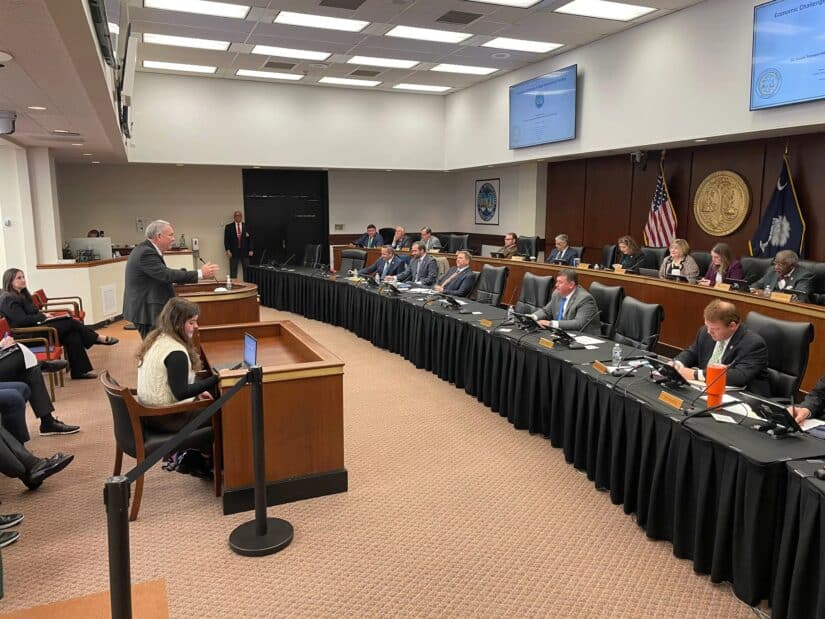
Lawmakers will review the recommendations over the coming days. The goal is to finalize draft legislation before the General Assembly returns next month.
While the final outcome is uncertain, one thing is clear. Decisions made in the upcoming legislative session may shape South Carolina’s transportation future for decades to come. The choices involve balancing revenue needs, taxpayer concerns, long-term infrastructure planning and the projected growth of the state’s population.
Regardless of which proposals move forward, residents can expect continued debate about how to fund road improvements without placing excessive strain on families and businesses.
The Larger Transportation Challenge
The situation reflects a national pattern. States across the country are struggling with outdated funding formulas that rely heavily on fuel consumption. As vehicles become more efficient and electric models grow in popularity, revenue systems must adapt.
Some states have experimented with:
• Road usage fees
• Mileage tracking
• Tiered vehicle registration systems
• Tolls on major highways
South Carolina lawmakers may revisit some of these ideas in the future as they search for sustainable, long-term solutions.
How South Carolina’s Growth Makes This Urgent
South Carolina has been one of the fastest-growing states in recent years. While growth brings economic benefits, it also requires significant infrastructure investment. Road networks built decades ago are now supporting far more traffic than they were designed to handle.
Key concerns include:
• Congestion in rapidly growing counties
• Delayed maintenance leading to potholes and structural decline
• High cost of resurfacing and bridge repairs
• Storm damage to existing infrastructure
• Increased freight movement due to industrial expansion
The longer the state delays action, the more costly the repairs become. Funding uncertainty can also jeopardize federal matching opportunities for major projects.
The Focus Moving Forward
The committee will continue evaluating the feasibility of each proposal. They must weigh revenue potential, public acceptance and legislative support. Nothing is final yet, but the conversation signals a significant shift toward long-term planning.
South Carolina’s future growth relies on safe and efficient roads. Without stable funding, transportation challenges will escalate, affecting millions of residents.
About Ted Law Firm
At Ted Law Firm, represents individuals throughout South Carolina who have been injured in accidents caused by unsafe conditions, including those involving hazardous roadways.We serve families across Aiken, Anderson, Charleston, Columbia, Greenville, Myrtle Beach, North Augusta and Orangeburg. When road maintenance falls behind, motorists face increased risks that can lead to serious harm. Our firm works to protect the rights of people who suffer injuries on the road and need guidance through the legal process.Contact us today for a free consultation.